
A Slow Full Day Elopement in Val d’Orcia, Tuscany
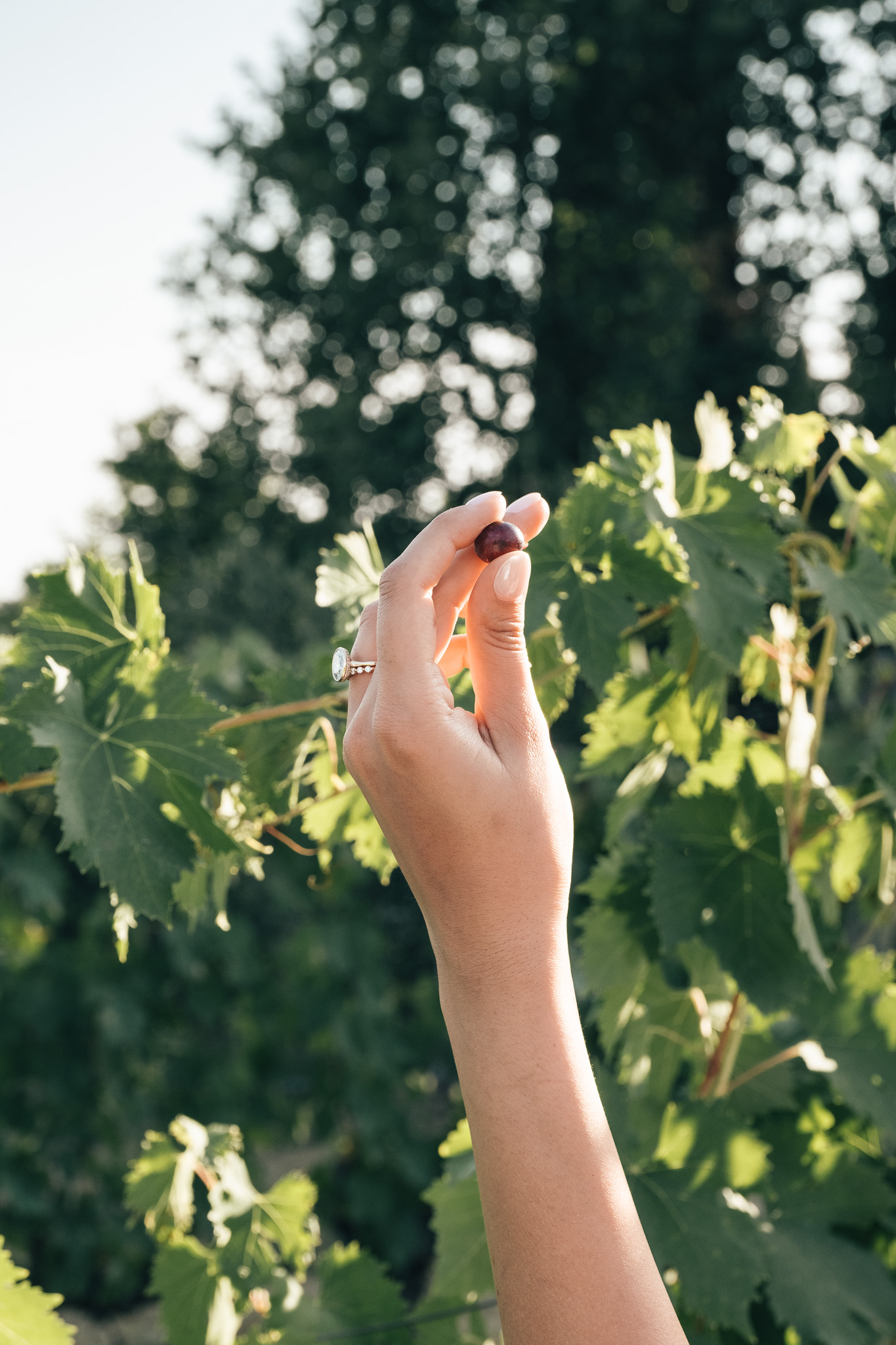
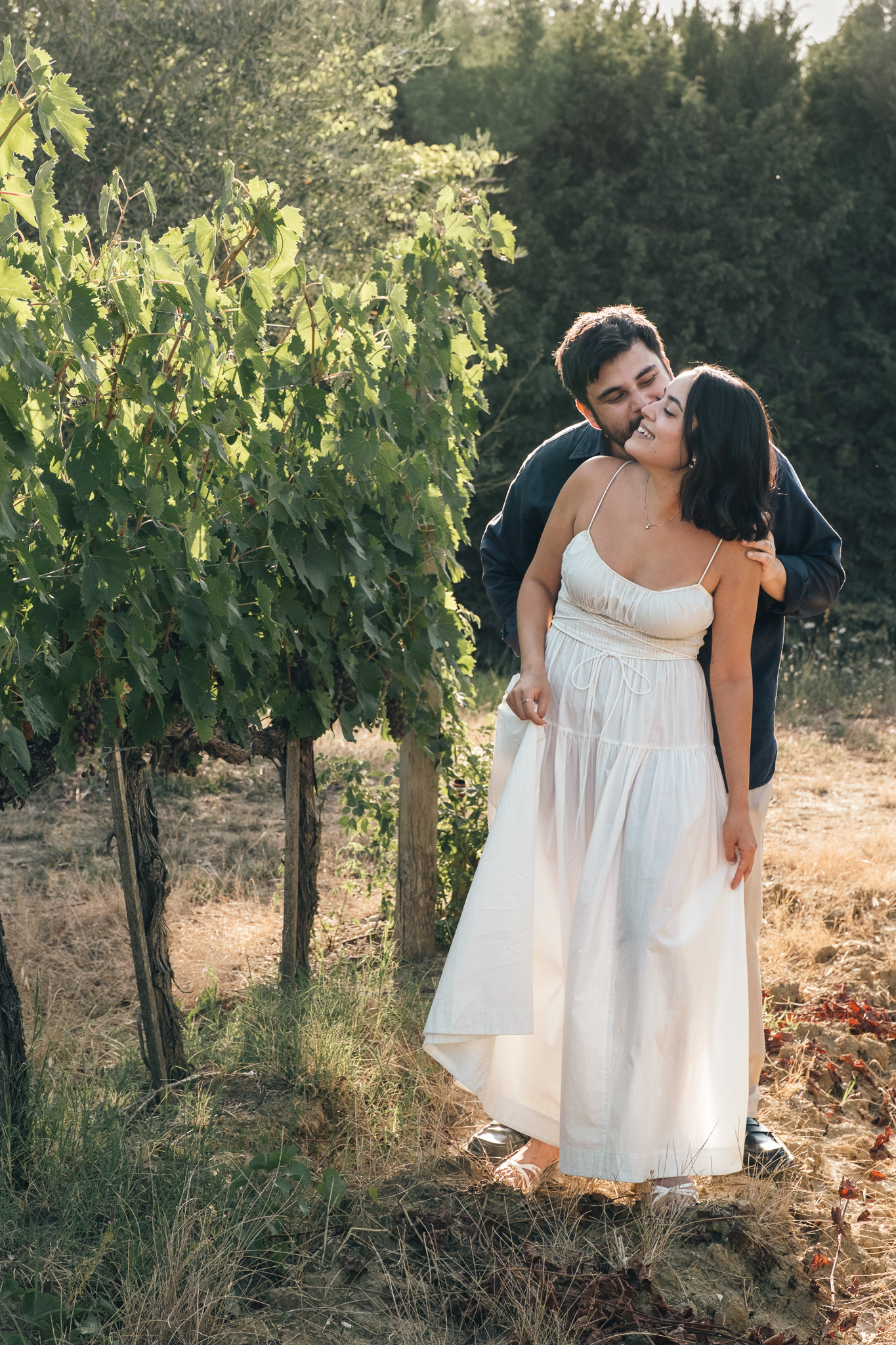
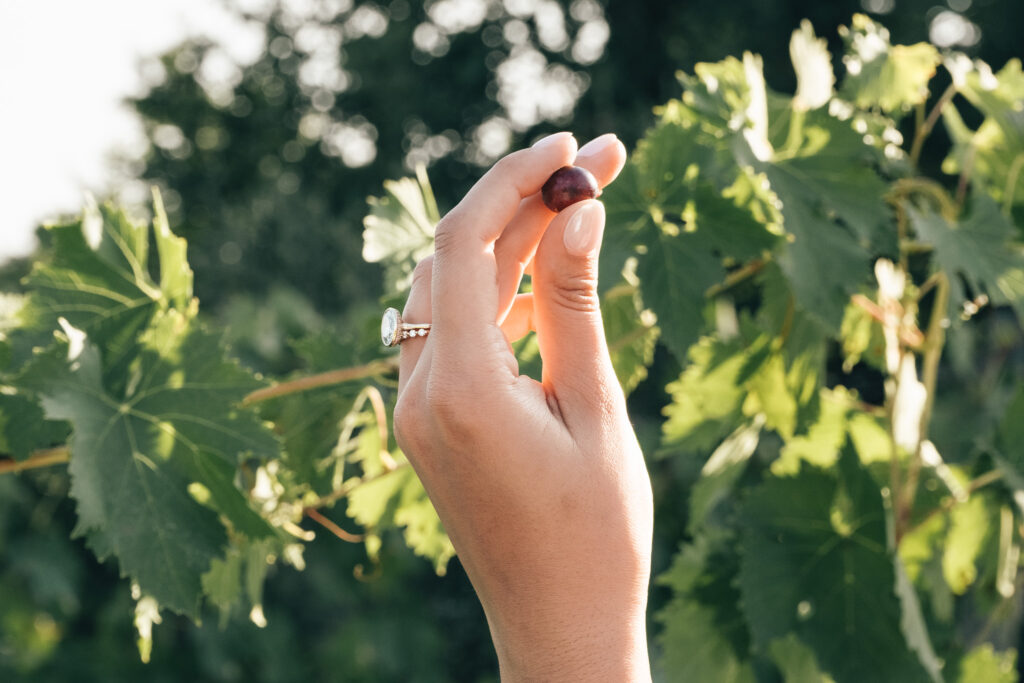
The day could probably be introduced with one photograph: the bride standing in a vineyard somewhere in southern Tuscany, holding a single Prugnolo Gentile grape in her hand. It is a small image, but somehow it contains a lot of what I remember about Rana and Zach’s elopement. Tuscany, wine, curiosity, wandering without too much urgency, and the feeling that we had enough time to stop whenever something caught our attention.
Months before they came to Italy, Rana and Zach had already explained to me what they wanted from their elopement. They were not looking for a day built around a rigid plan or a sequence of perfect locations. They wanted to experience Tuscany with enough freedom to explore, adapt and leave room for discovery. They wanted the food, the wine, the landscape, the villages, the vineyards and the unexpected things that appear only when you are not rushing toward the next item on a schedule.
What made our conversations feel especially natural was that we seemed to value many of the same things from the beginning: enjoying the place we were in, paying attention to what surrounded us, keeping the atmosphere relaxed, and allowing the day to unfold without trying to control every minute of it. That was also the reason we decided to spend the whole day together.
They had travelled all the way from Texas because they wanted something very different from a traditional wedding. Just the two of them, far from home, keeping one of the most important days of their lives intimate and entirely their own. Val d’Orcia felt like the right place for that kind of experience.
A Full Day Elopement That Was Never Meant to Stay in One Place
From our first conversations, it was clear that this was not going to be an elopement built around one venue or one beautiful backdrop. Rana and Zach wanted Tuscany itself to become part of the day, so instead of choosing a single location and staying there, we moved slowly through the area.
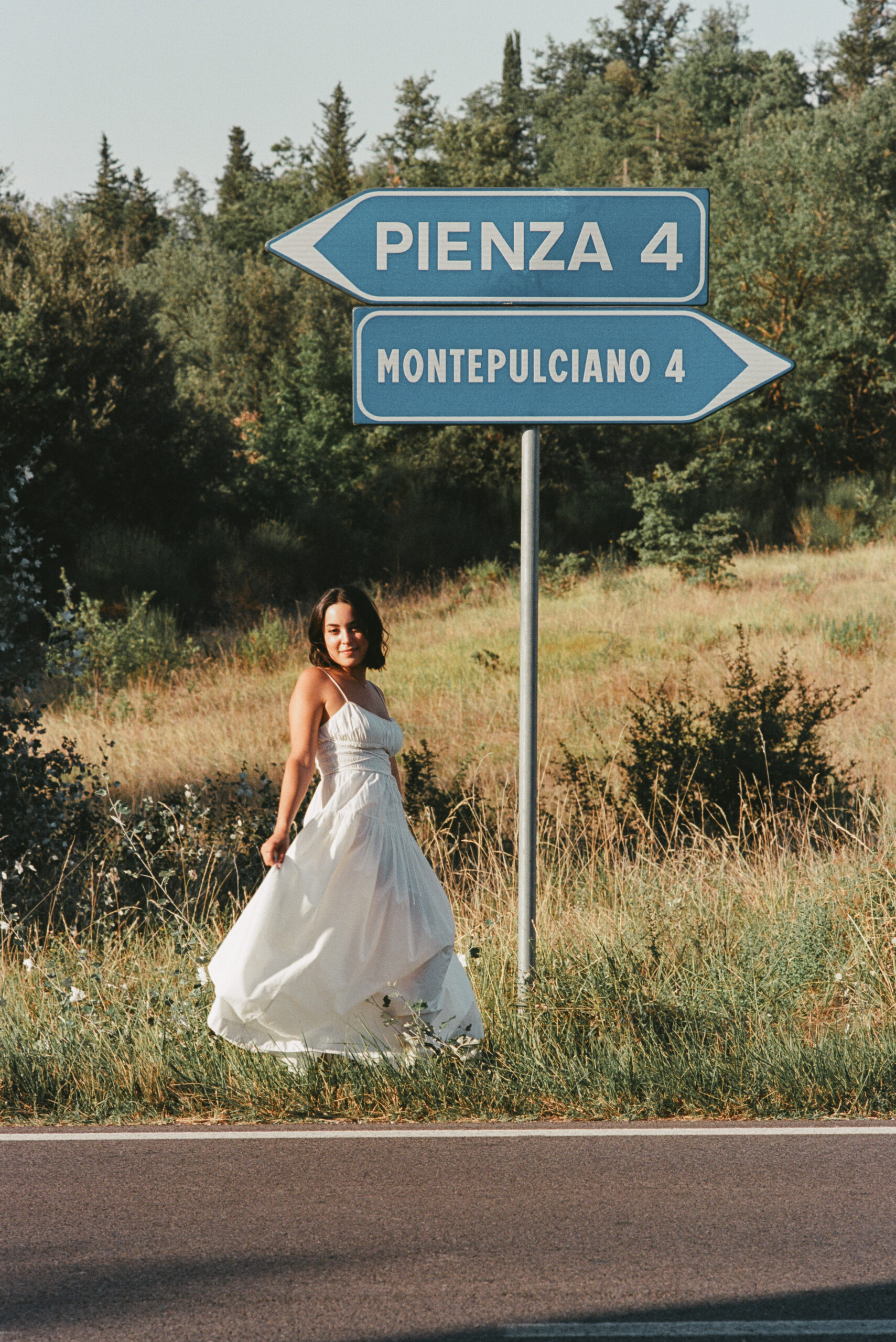
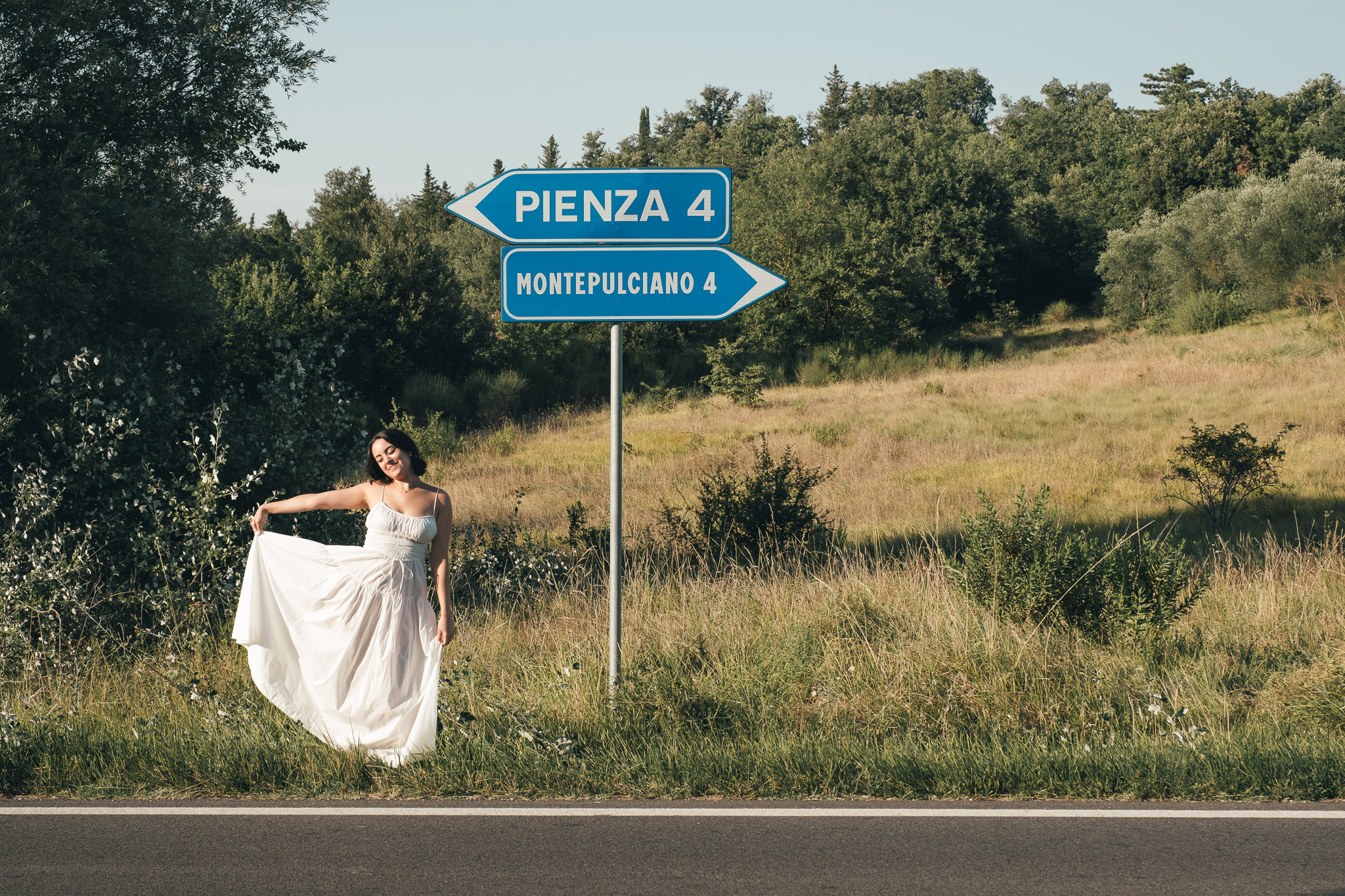
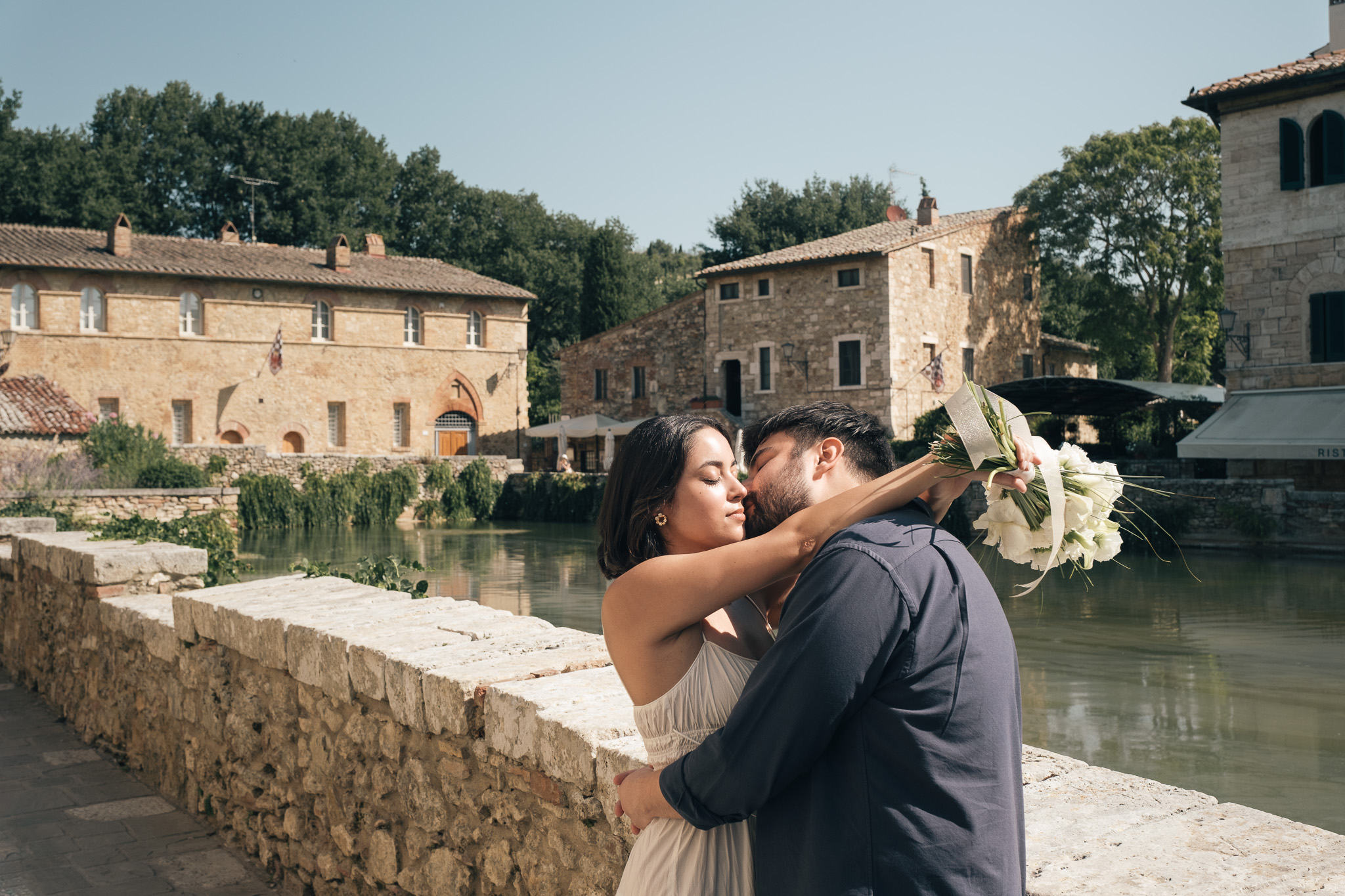
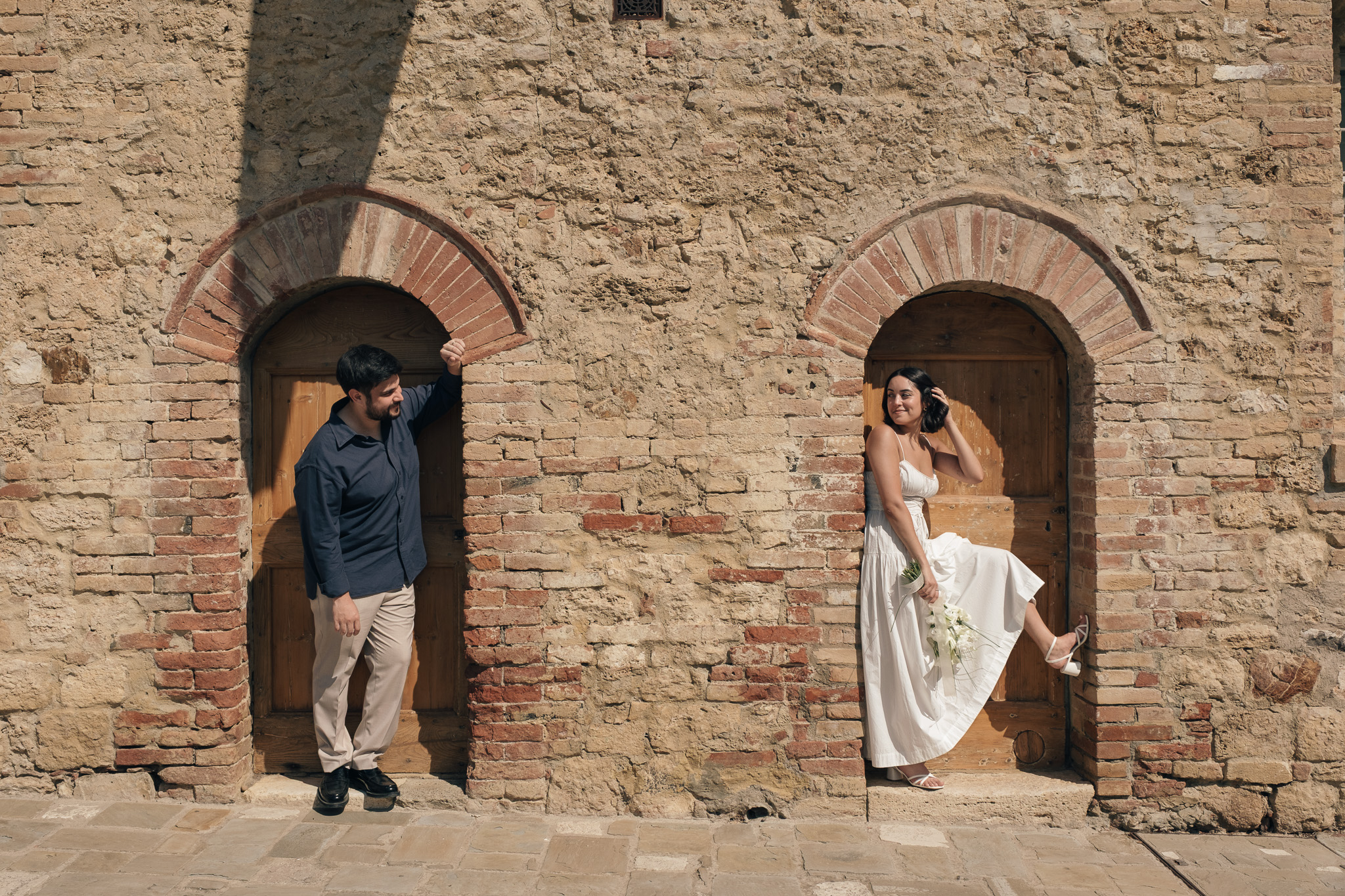
We walked through medieval streets, stopped in the countryside, passed vineyards, drove along small Tuscan roads and spent time between Pienza, Bagno Vignoni, Montepulciano and the landscape of Val d’Orcia that connects them. Sometimes we photographed because something caught our attention. Sometimes we stopped because the light looked good, because we wanted a coffee, or because one of the small roads simply seemed worth following. Other parts of the day were spent talking and travelling from one place to another.
That freedom mattered. A full day elopement does not need to feel like a full day photoshoot. In fact, I think it works best when it feels like the opposite. The photography should slowly become part of the experience rather than the experience becoming something organised around the camera.
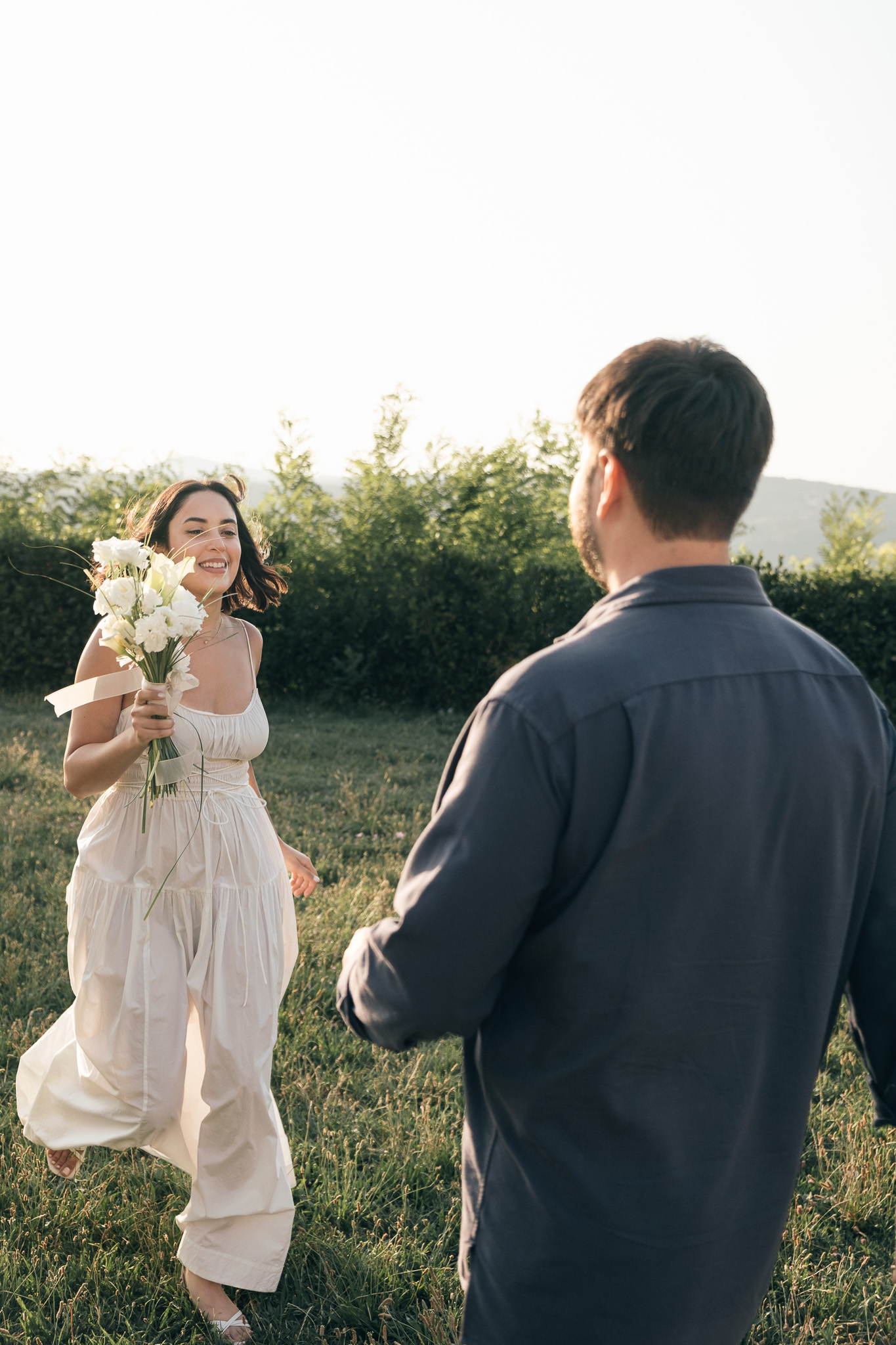
What Rana and Zach wanted was not simply a record of where they had been. They wanted the day to feel like them. That meant giving them space to enjoy each other, move naturally, change direction when something felt more interesting, and forget about being photographed from time to time.
For me, that is where the most personal photographs usually begin. This is also where slow travel and elopement photography begin to overlap. Slow travel is not necessarily about spending weeks in one place. It is more about giving a place enough attention to notice where you actually are. You can spend a long time somewhere and still move through it like a checklist, or you can spend one day with enough curiosity that the place starts to reveal itself.
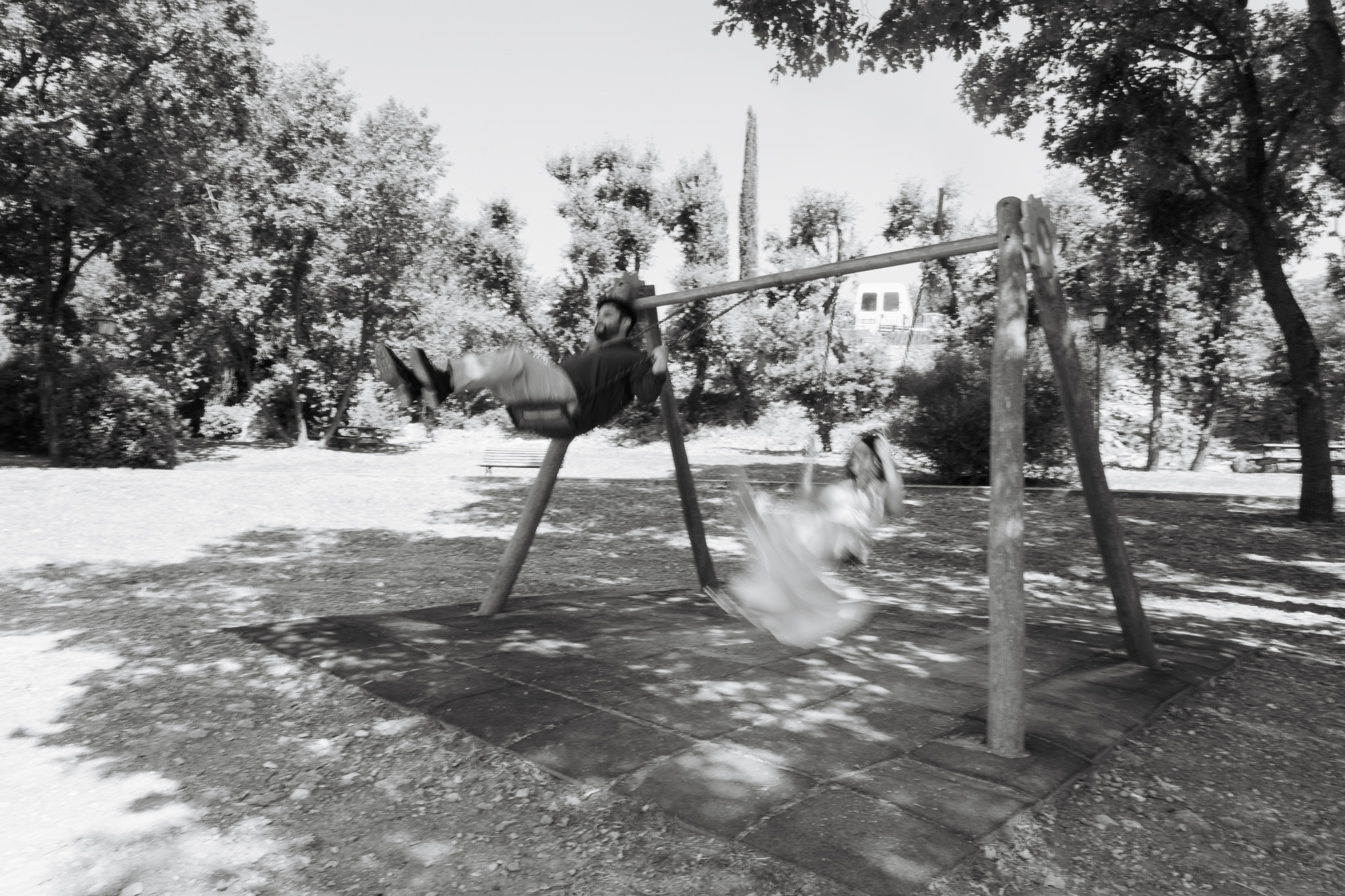
Photography behaves in much the same way. When everything is rushed, people become more aware of the camera because there is always another location to reach and another photograph to make. When there is enough time, something changes. People eventually stop thinking about being photographed. They start walking naturally, talking, looking around, getting distracted, and the photographs begin to happen inside those moments rather than outside them.
Rana and Zach were completely comfortable with that rhythm. They had specifically told me that they wanted to experience Tuscany with everything that came with it, so there was never any pressure to make every minute productive. We could let the day develop at its own pace, and for me that is one of the best ways to photograph an elopement in Tuscany.
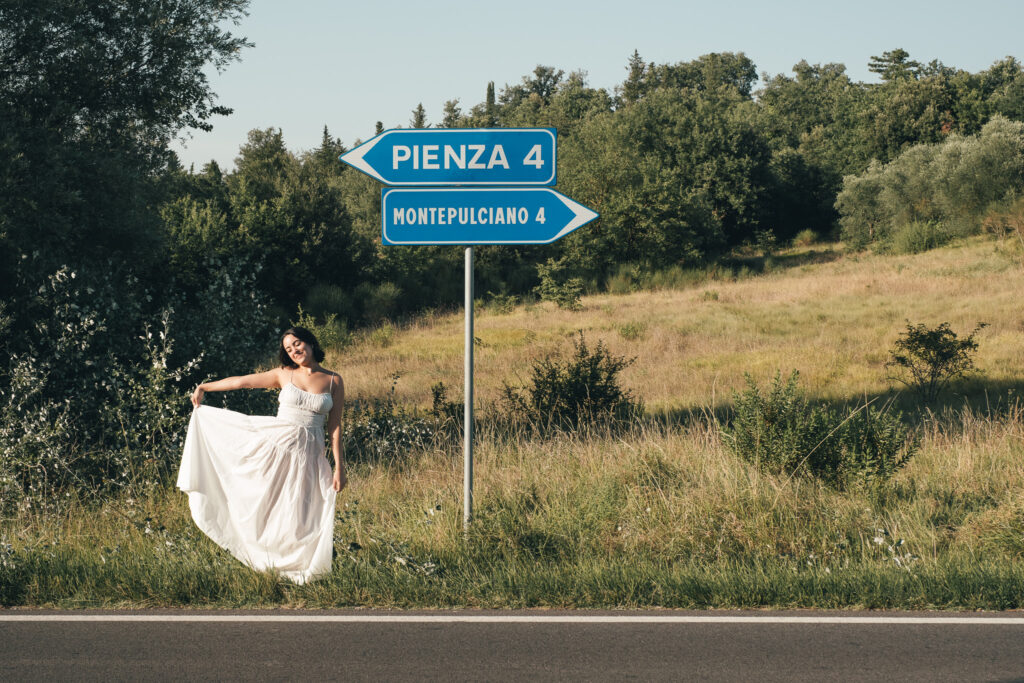
Between Pienza, Bagno Vignoni and Montepulciano
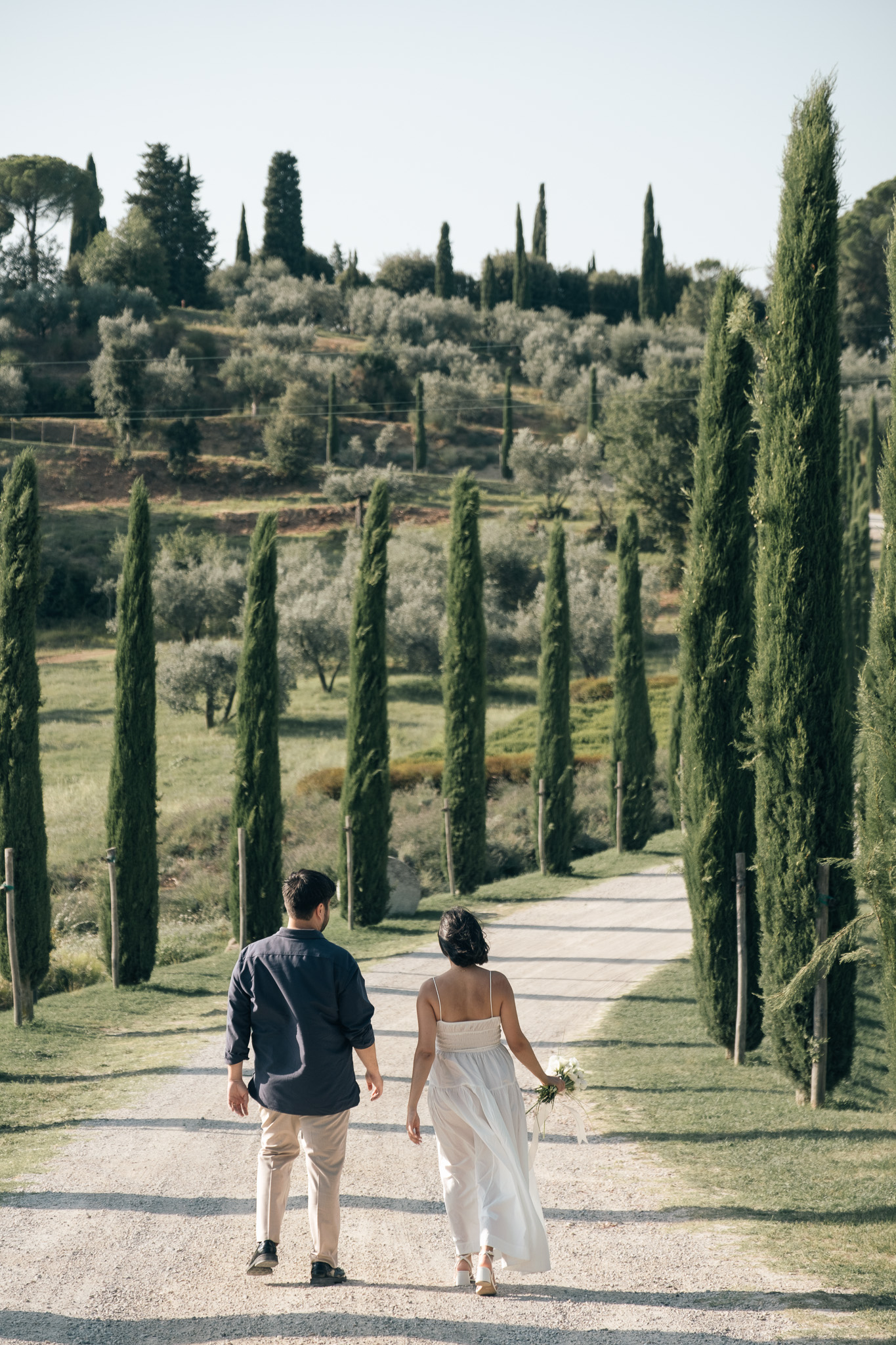
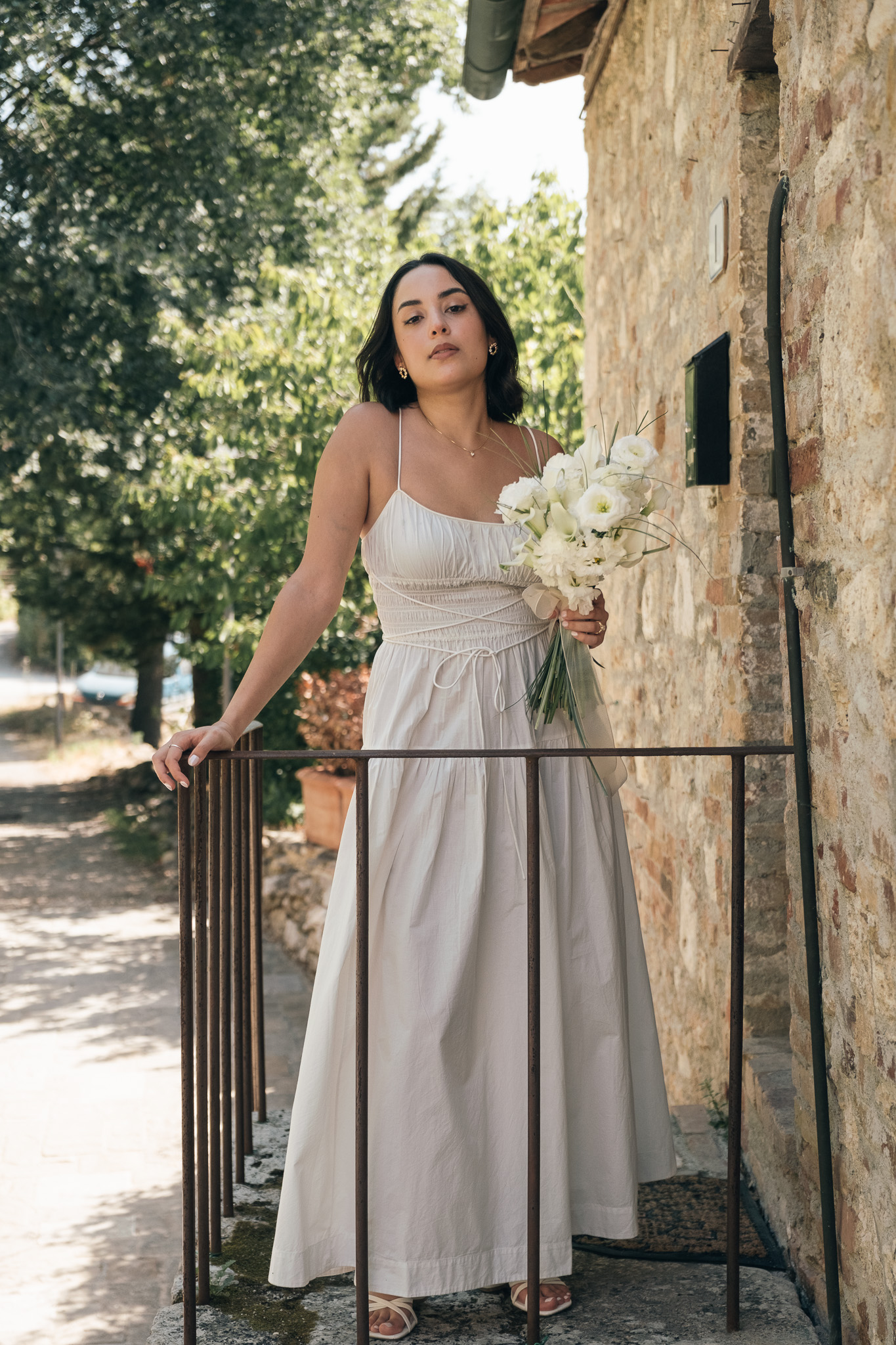
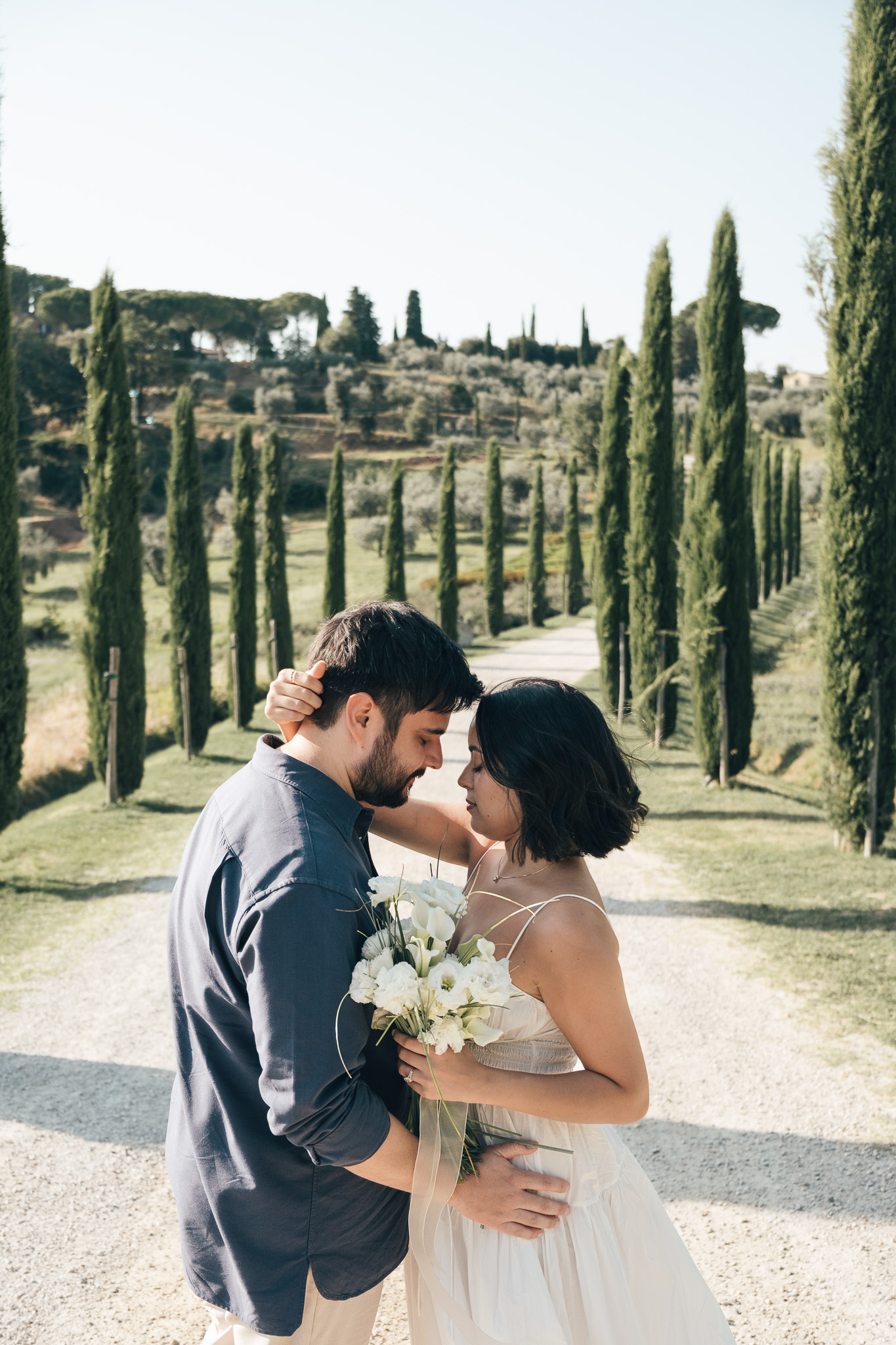
Val d’Orcia is one of those places that is almost too easy to photograph. The landscape already contains everything people associate with Tuscany: rolling hills, cypress trees, stone houses, vineyards, medieval towns and roads disappearing into the countryside. The challenge is not finding beautiful things to photograph. The challenge is avoiding photographs that only repeat what everyone already expects to see.
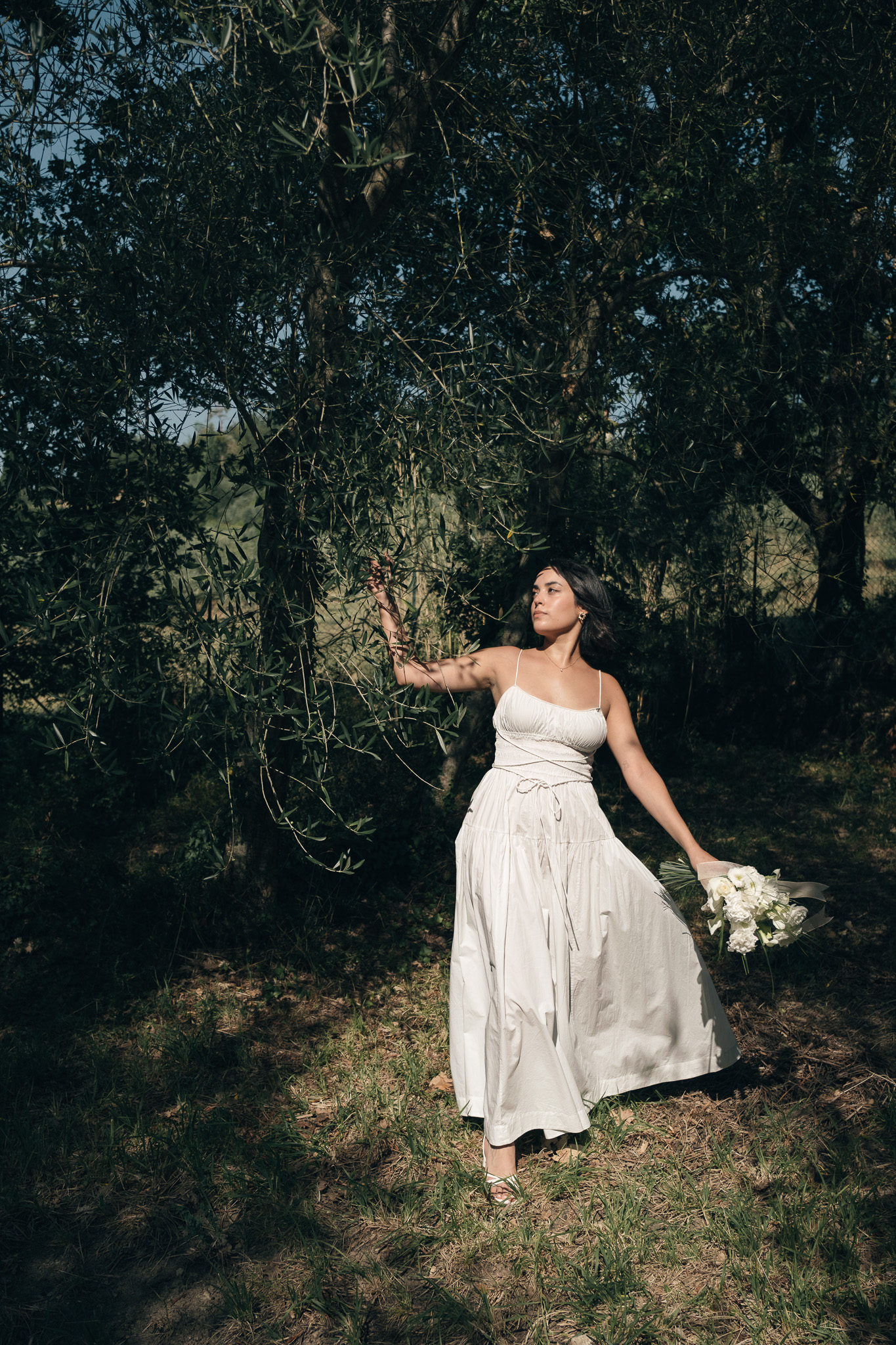
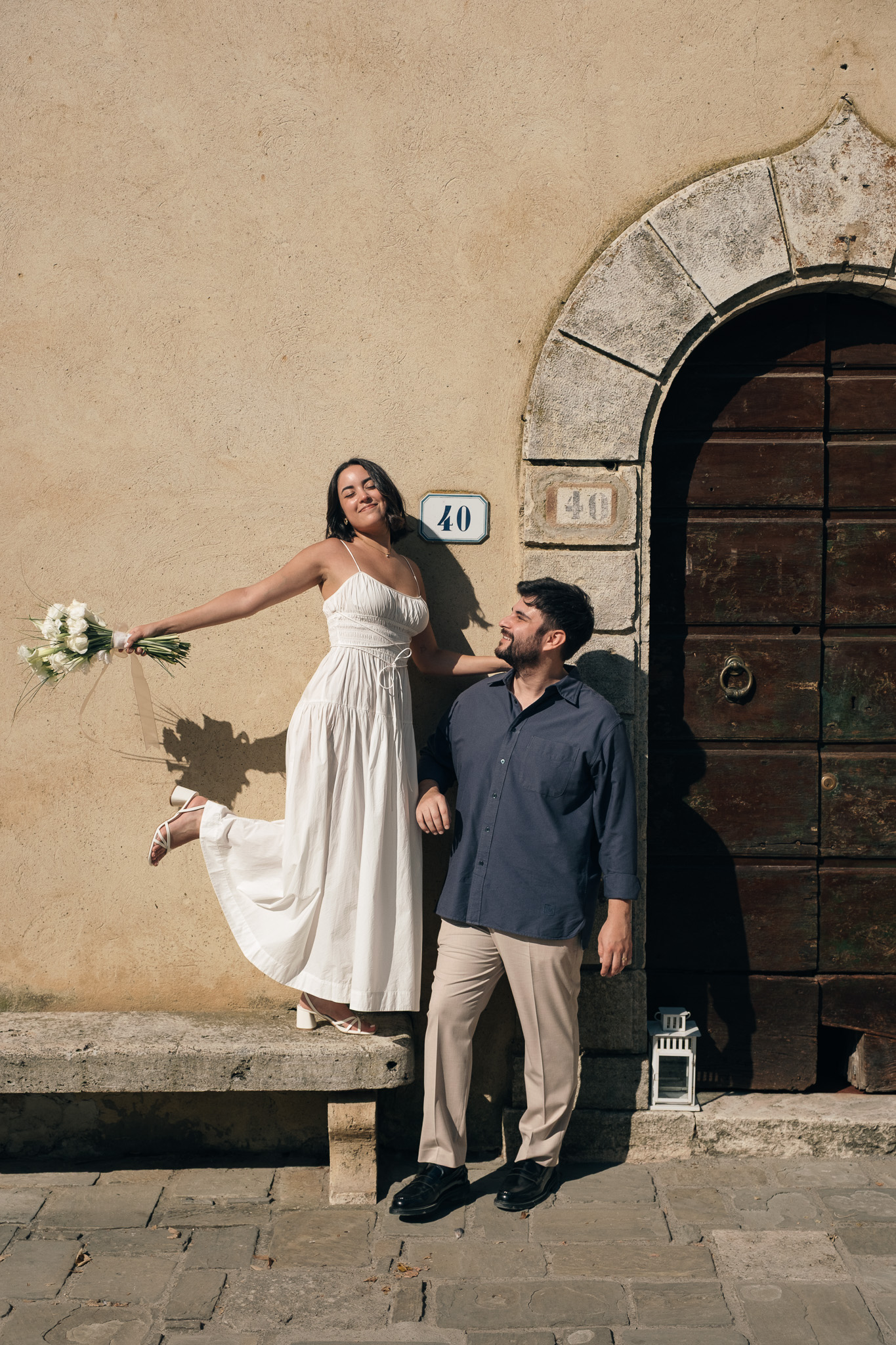
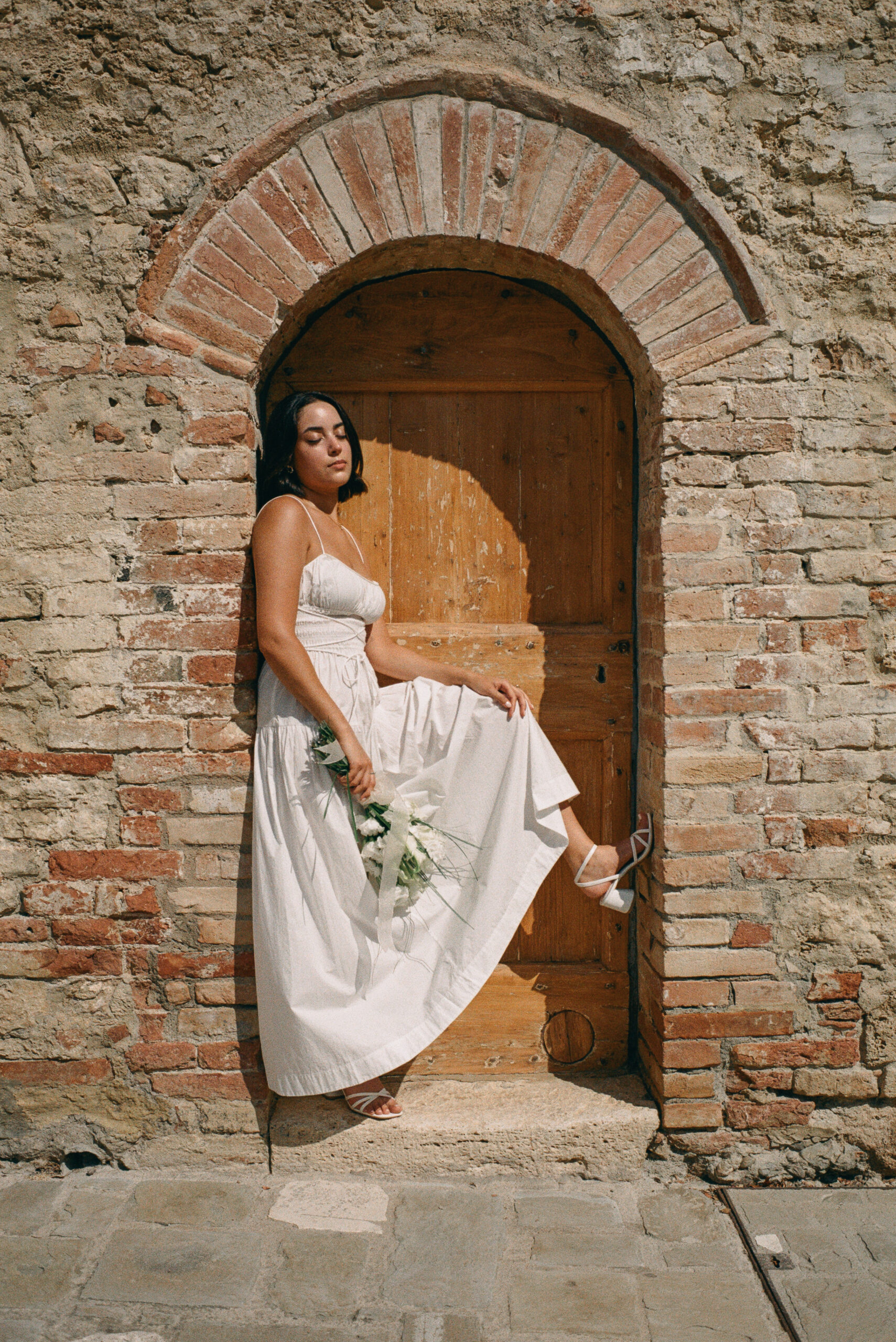
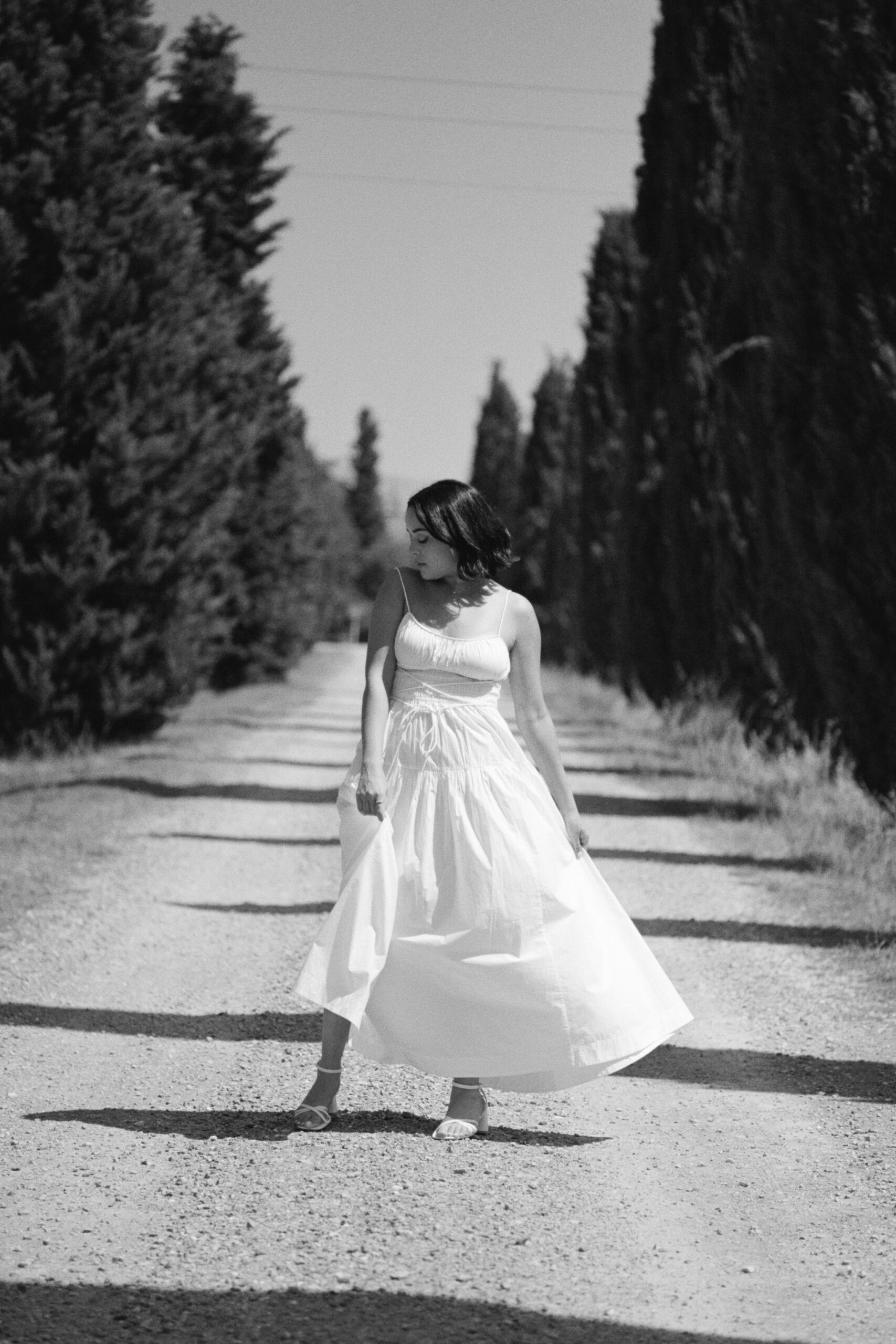
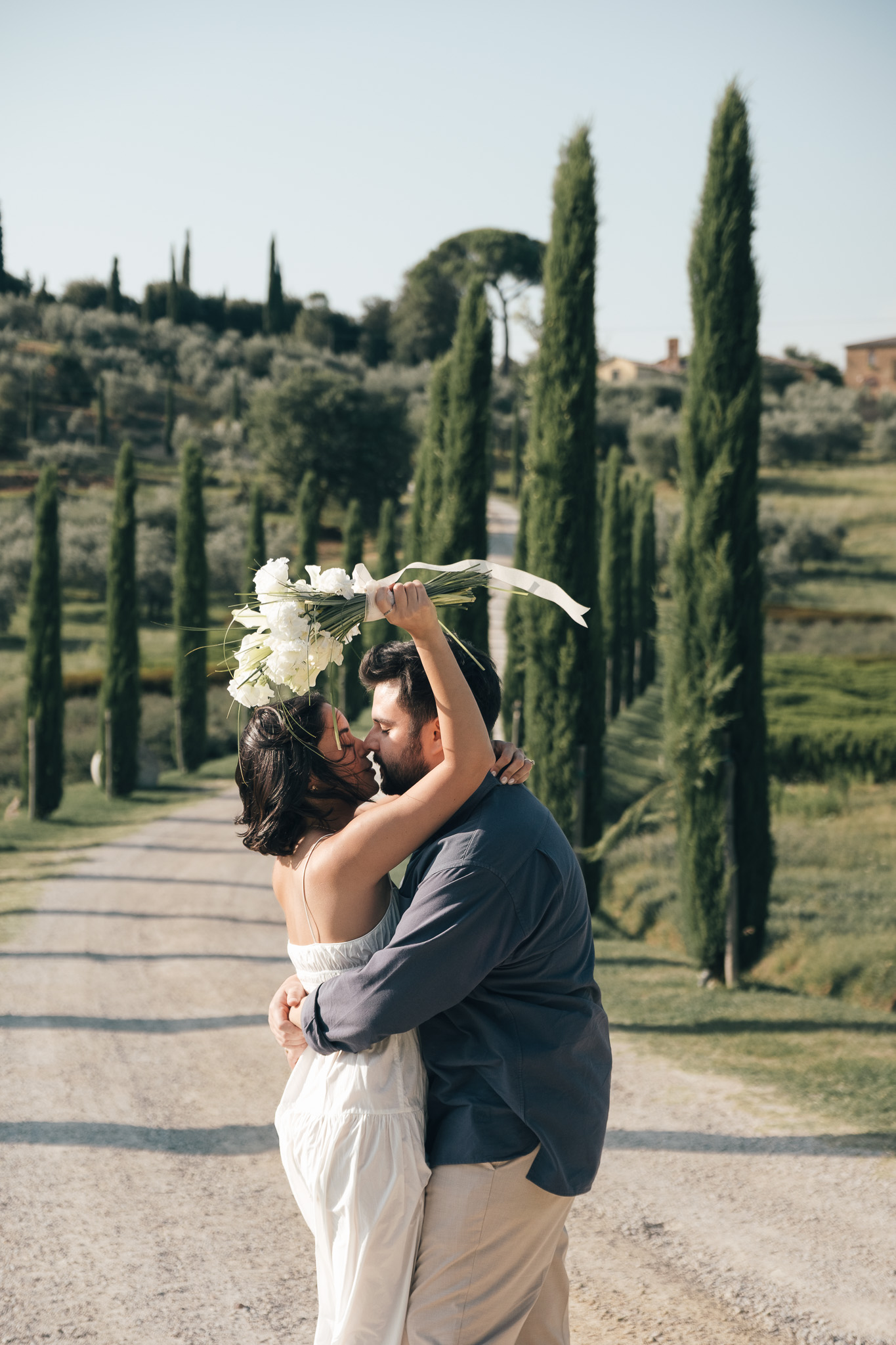
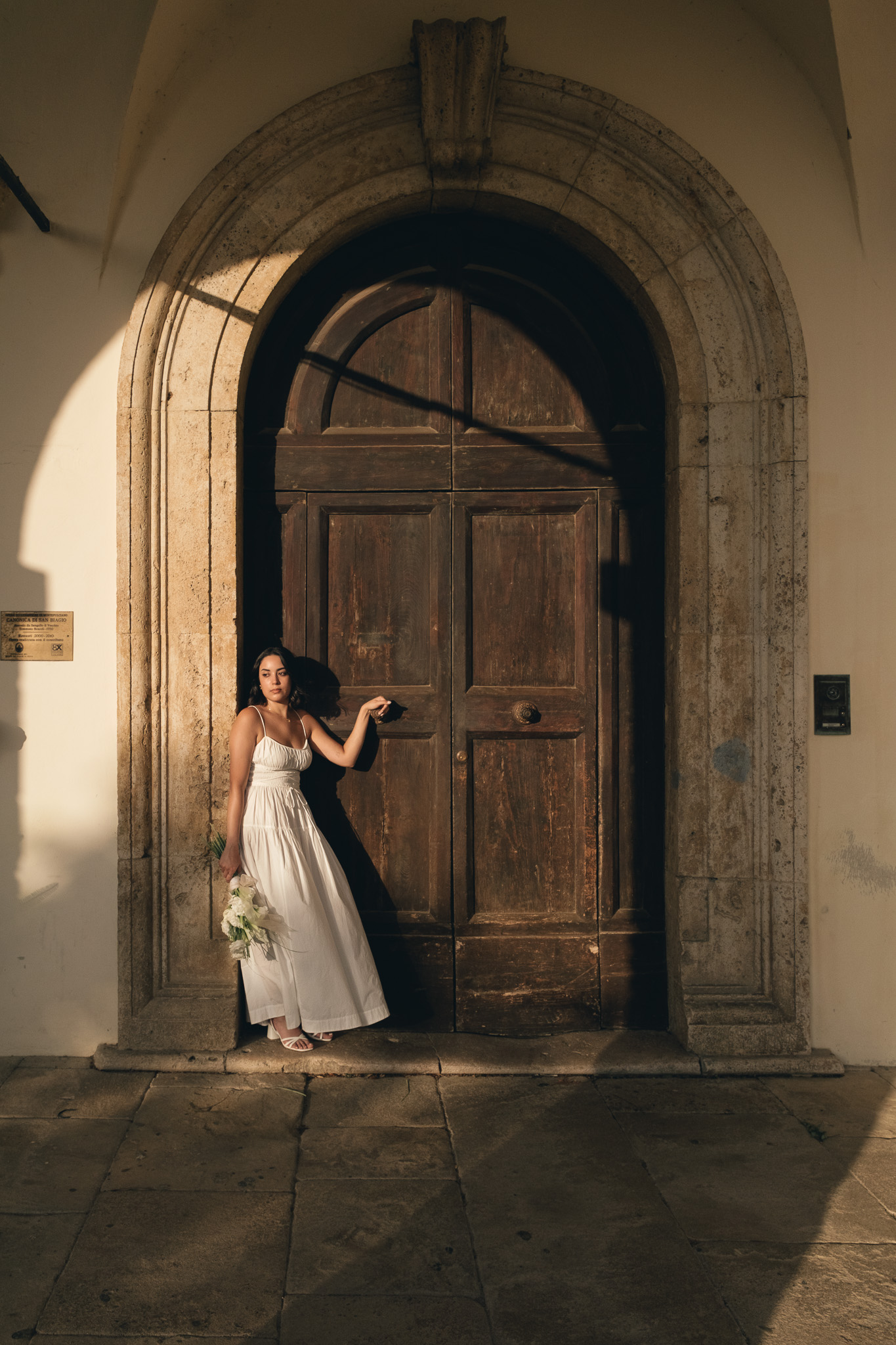
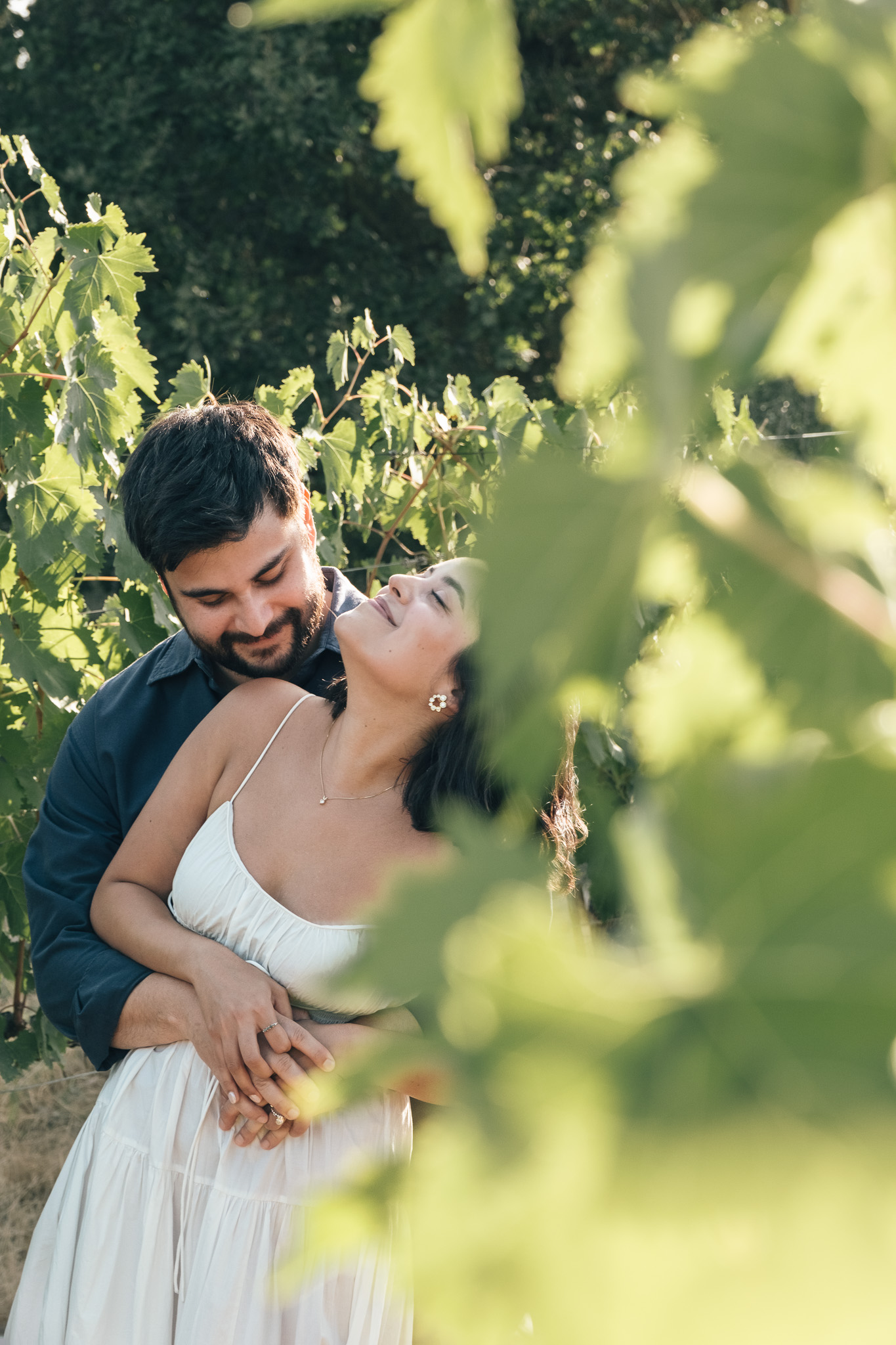
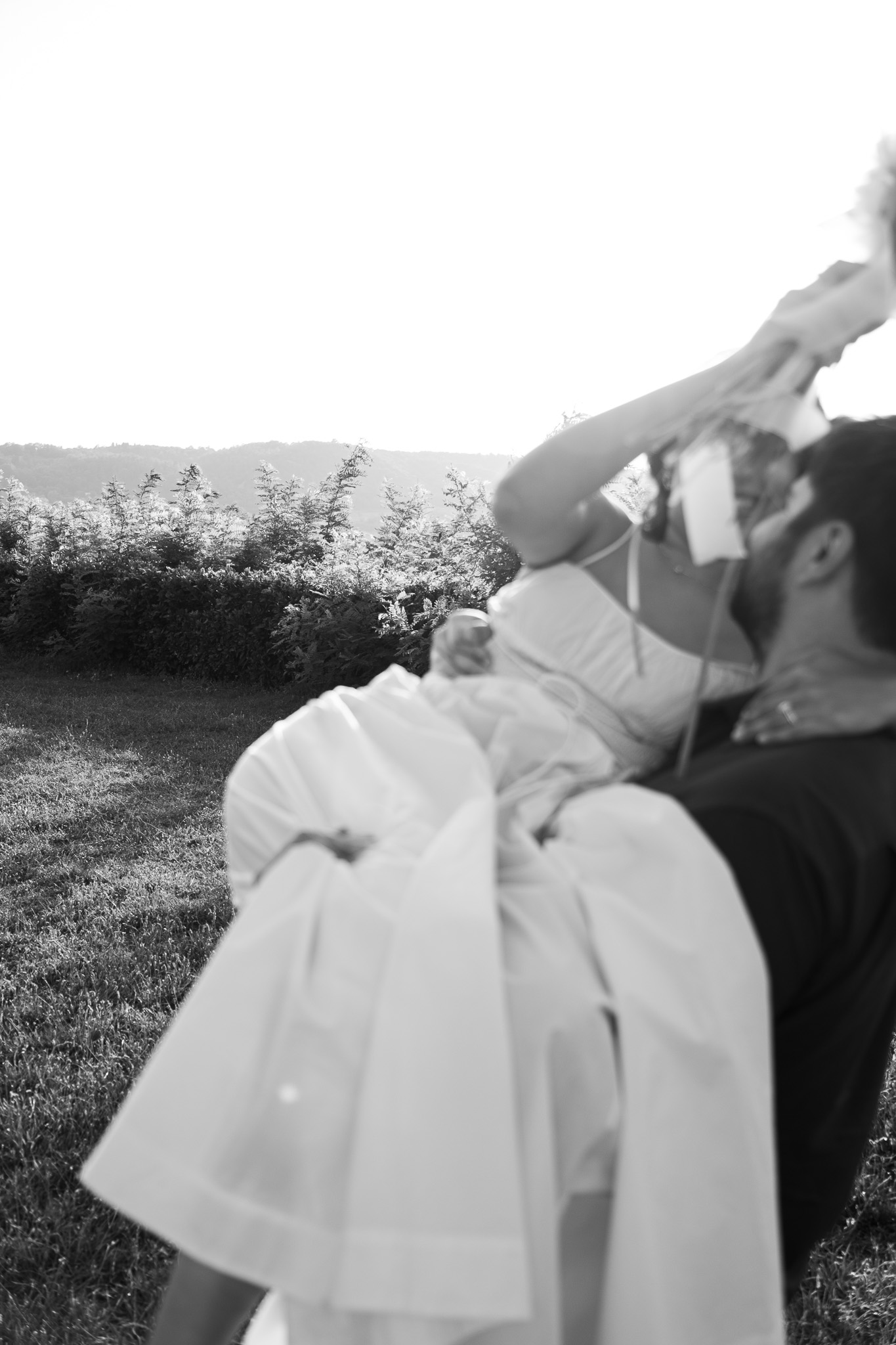
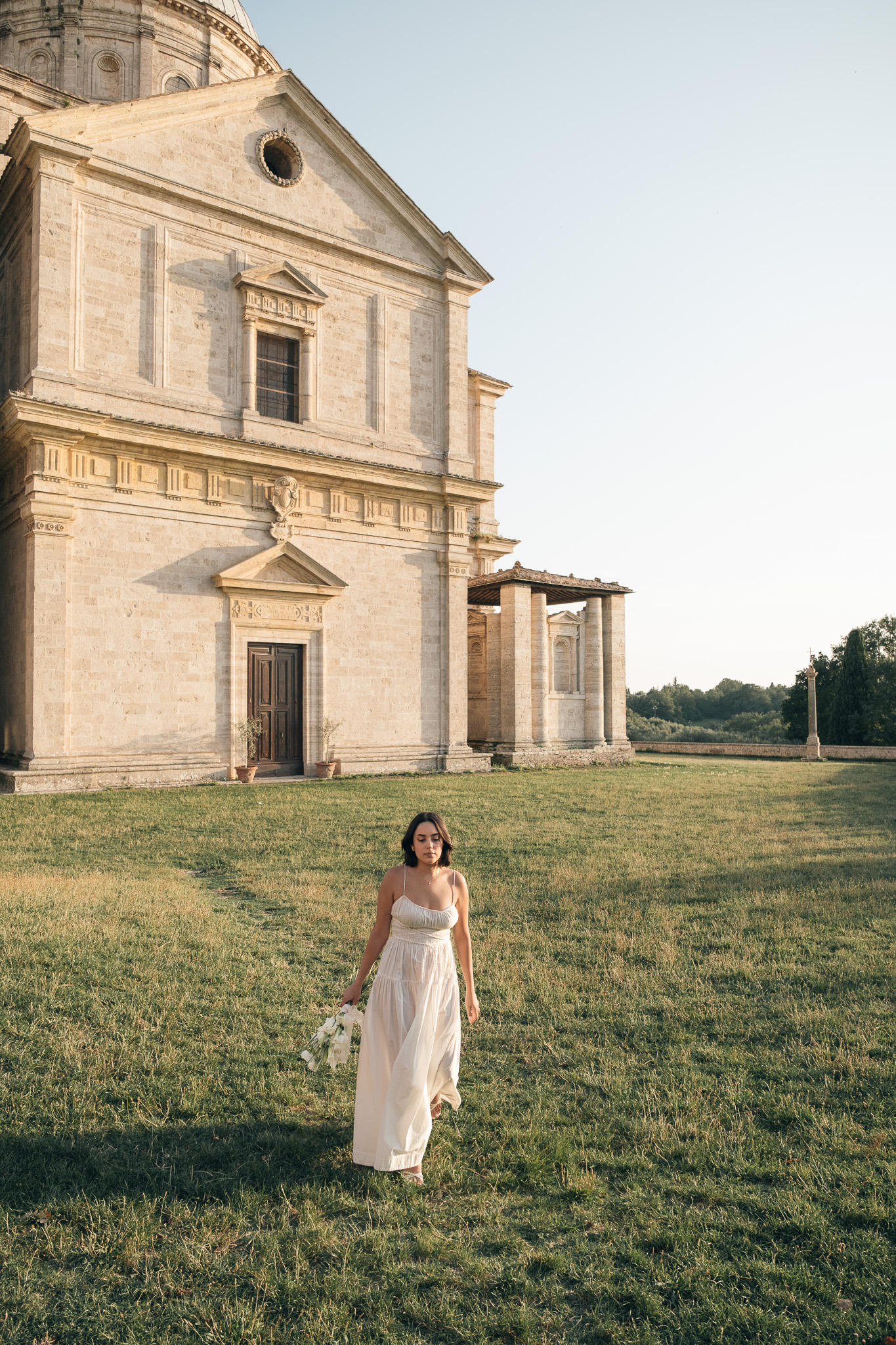
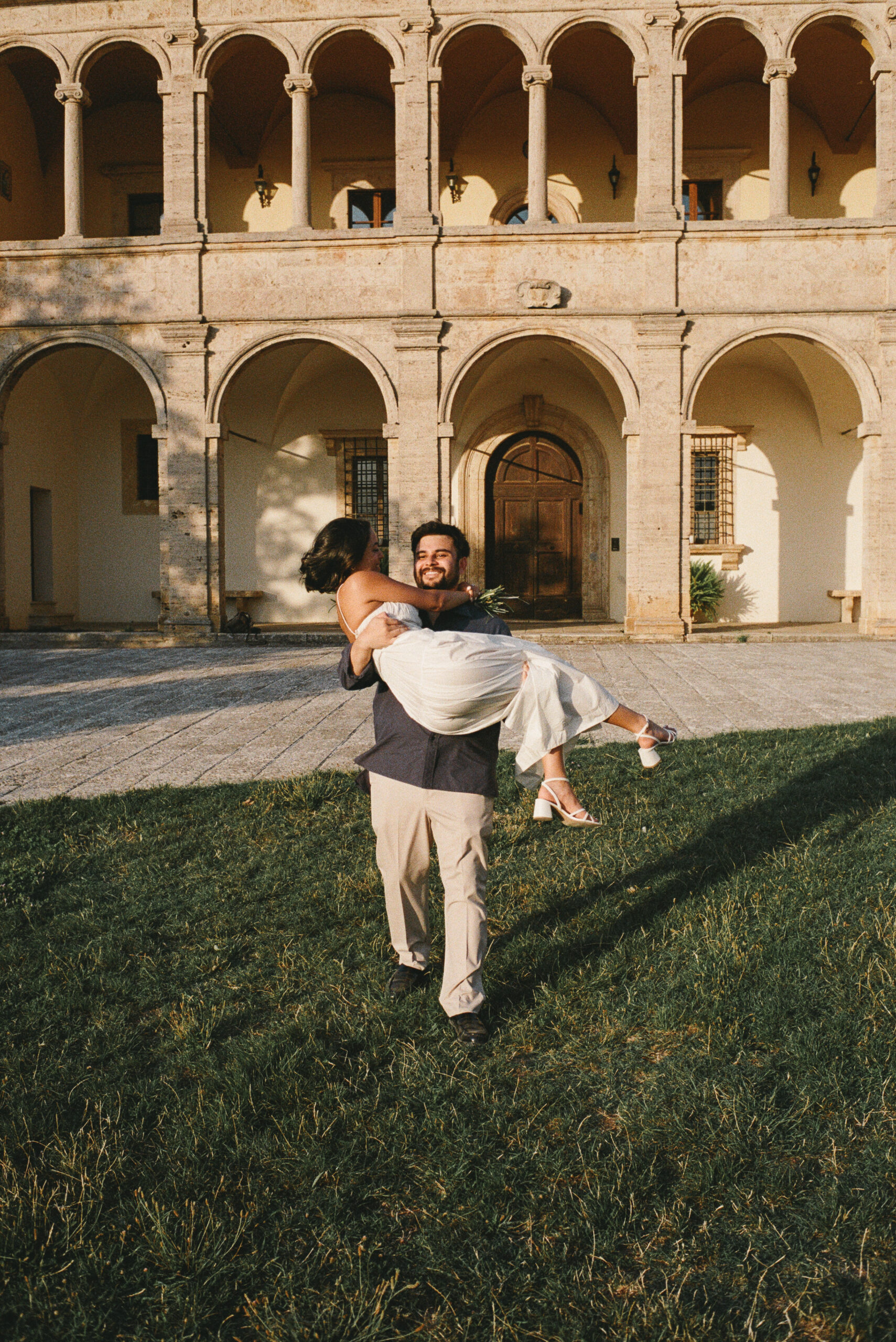
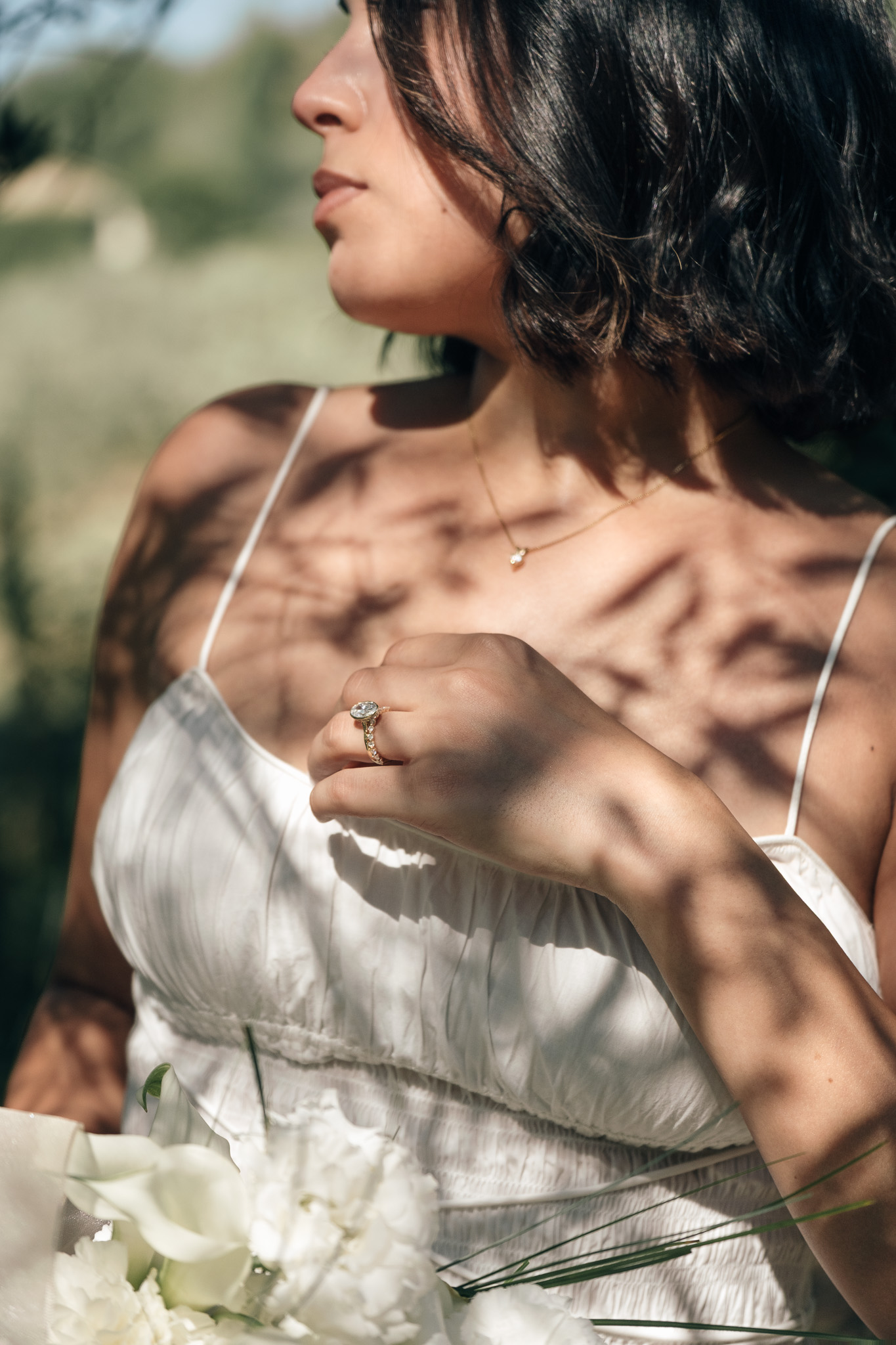
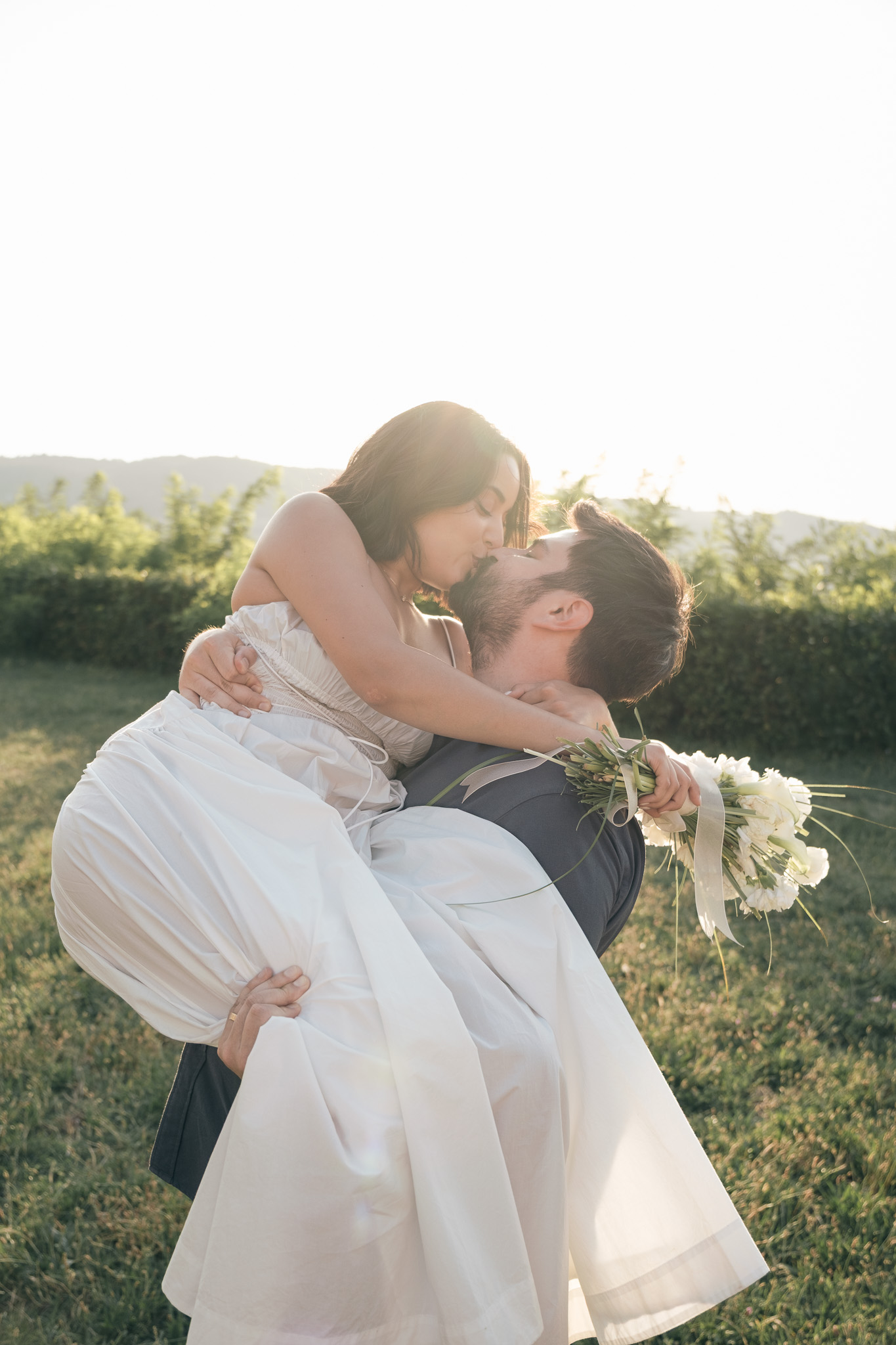
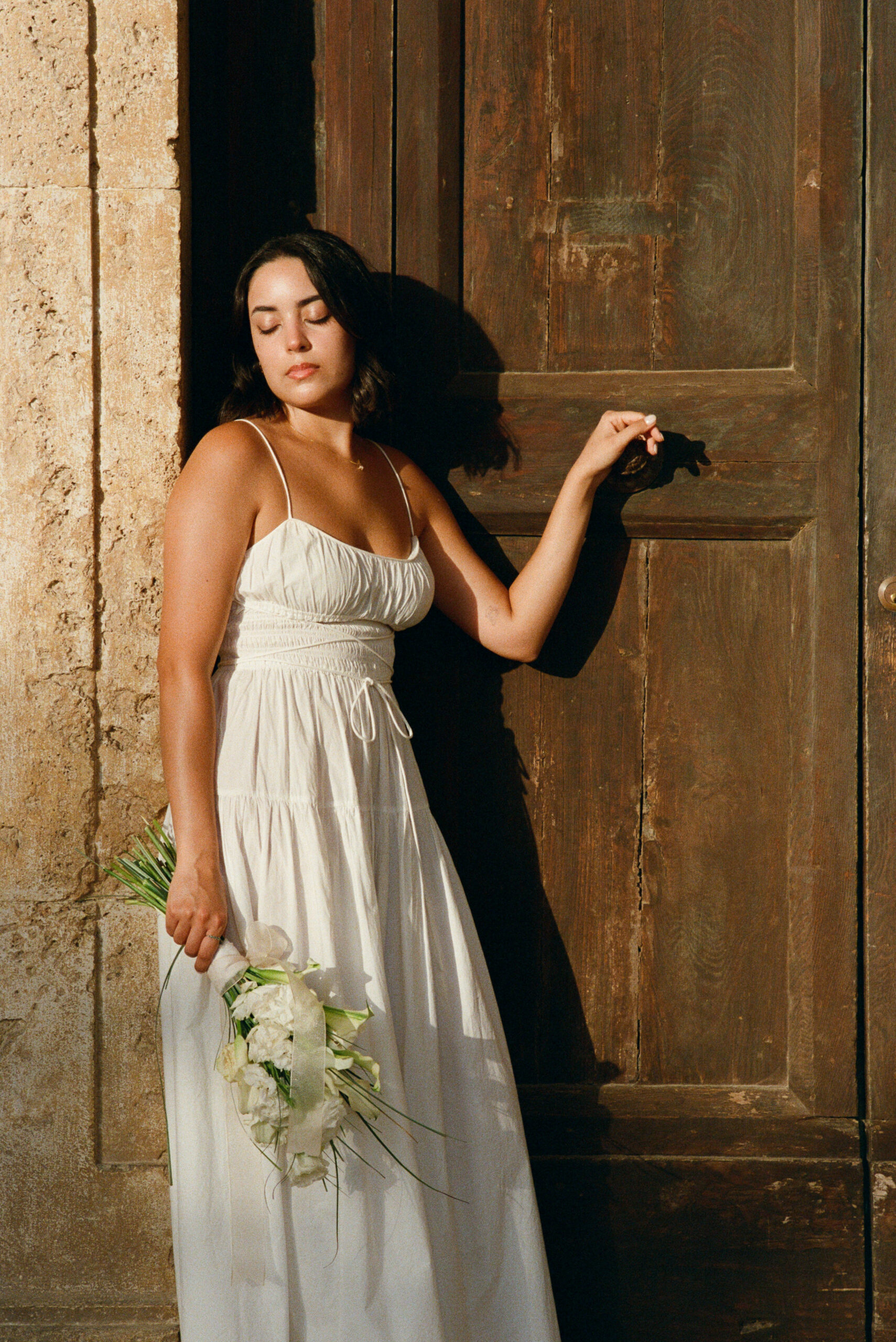
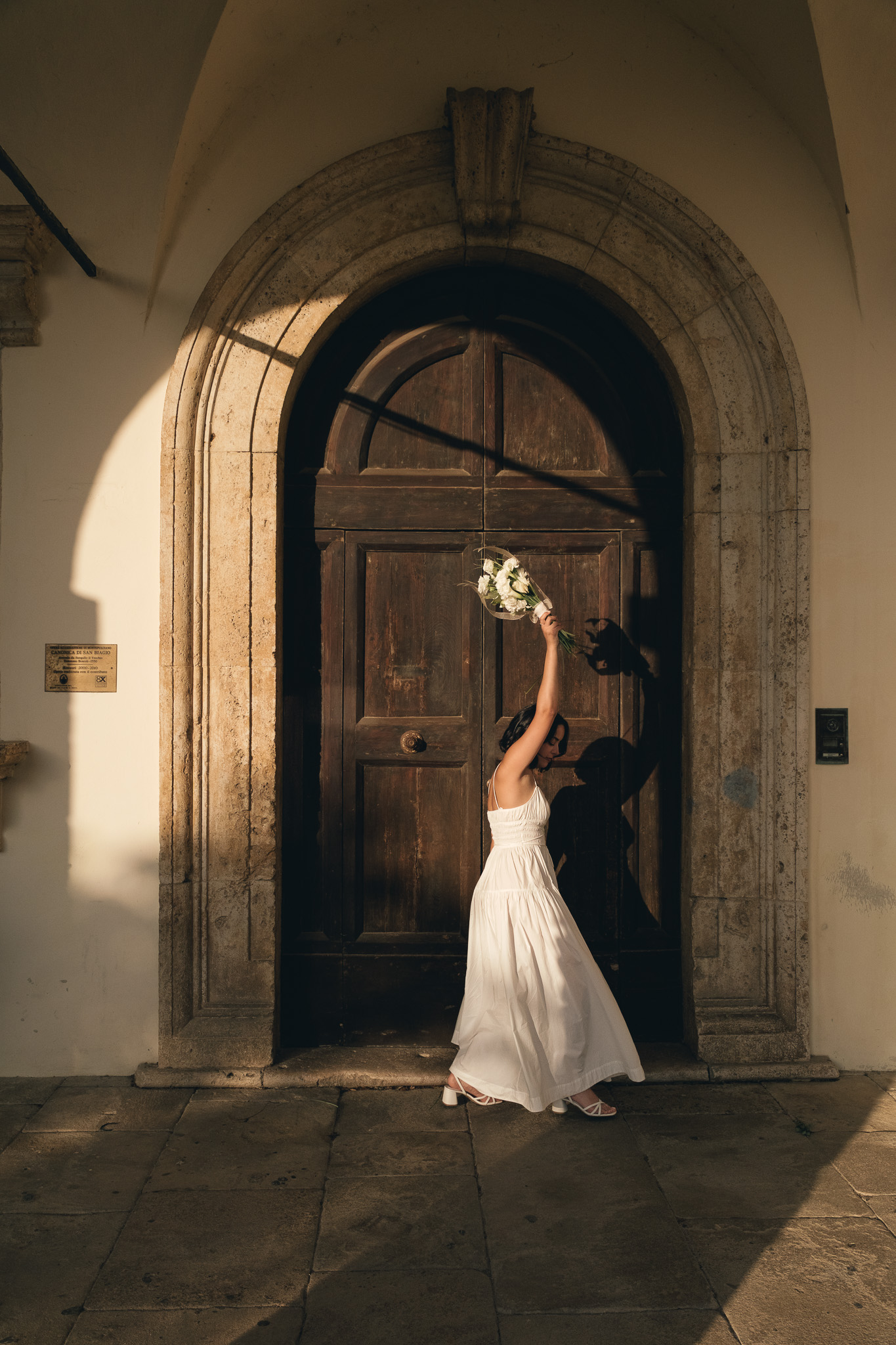
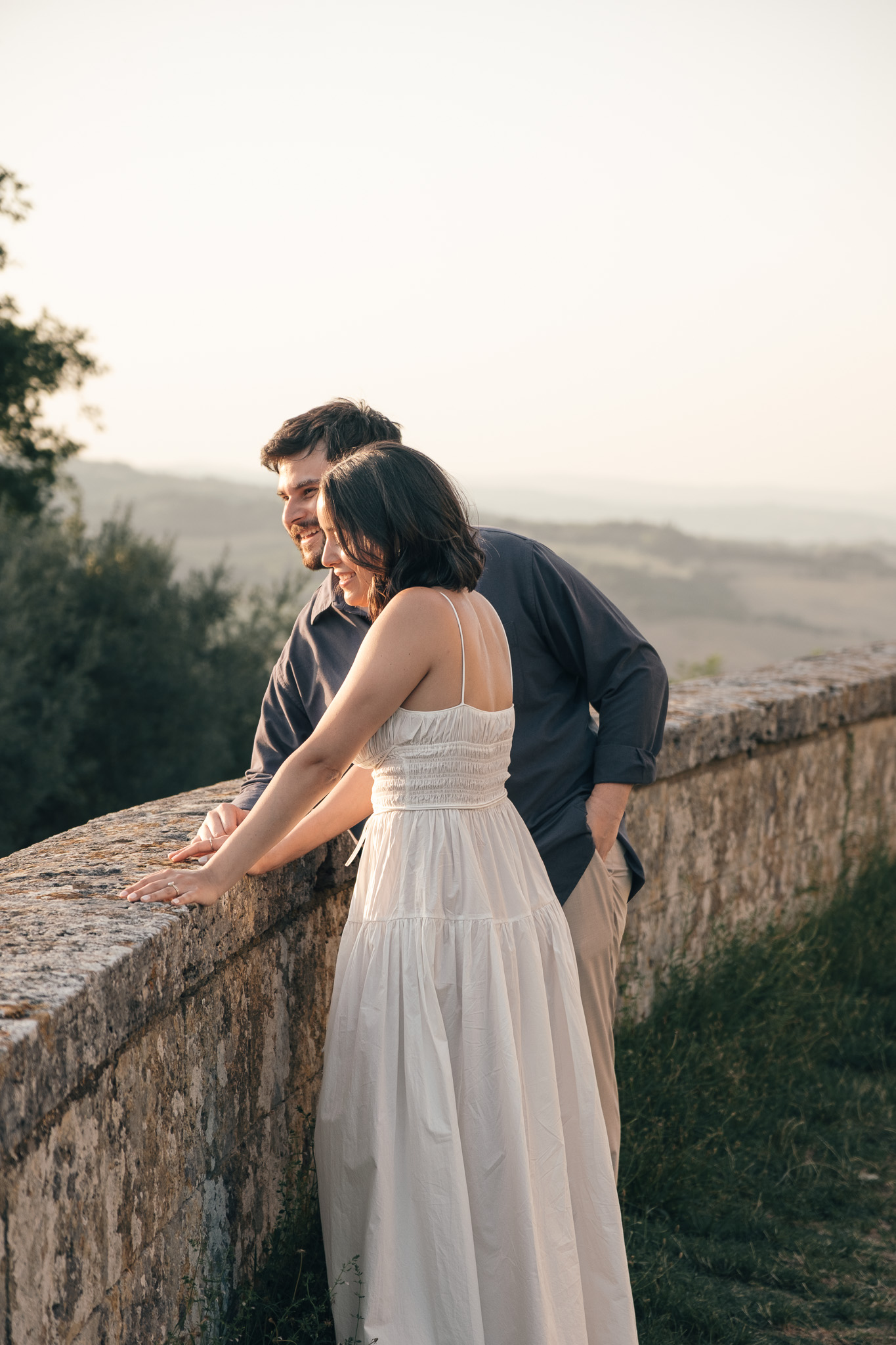
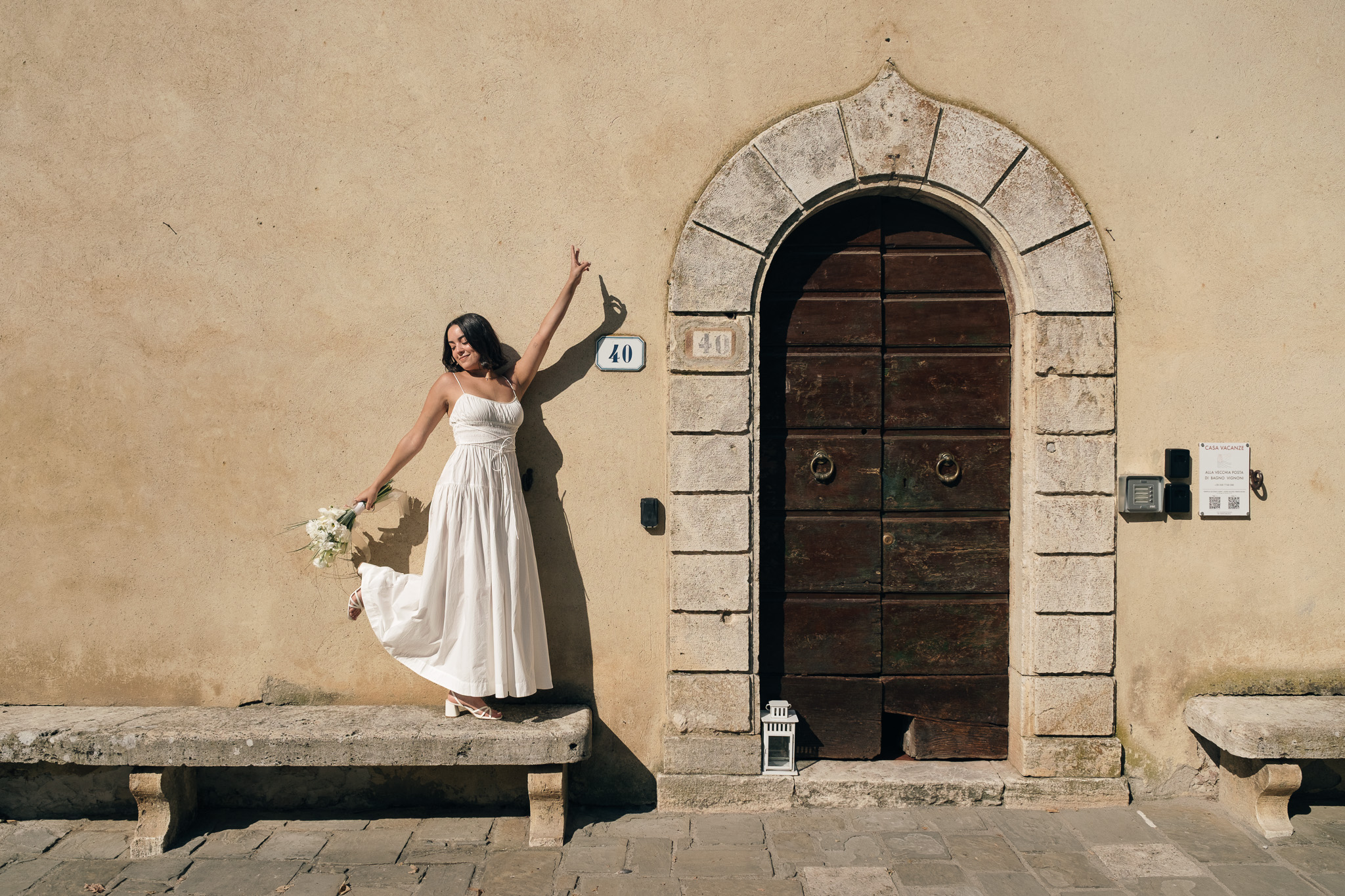
I am much more interested in what happens when two people enter that landscape and begin to interact with it. Rana walking along the side of a road. Zach lifting her into his arms. A stop beside an old doorway because the afternoon light had created an interesting shadow. The two of them disappearing down a street. A vineyard that was never part of the original plan. A quiet moment overlooking the valley before getting back into the car.
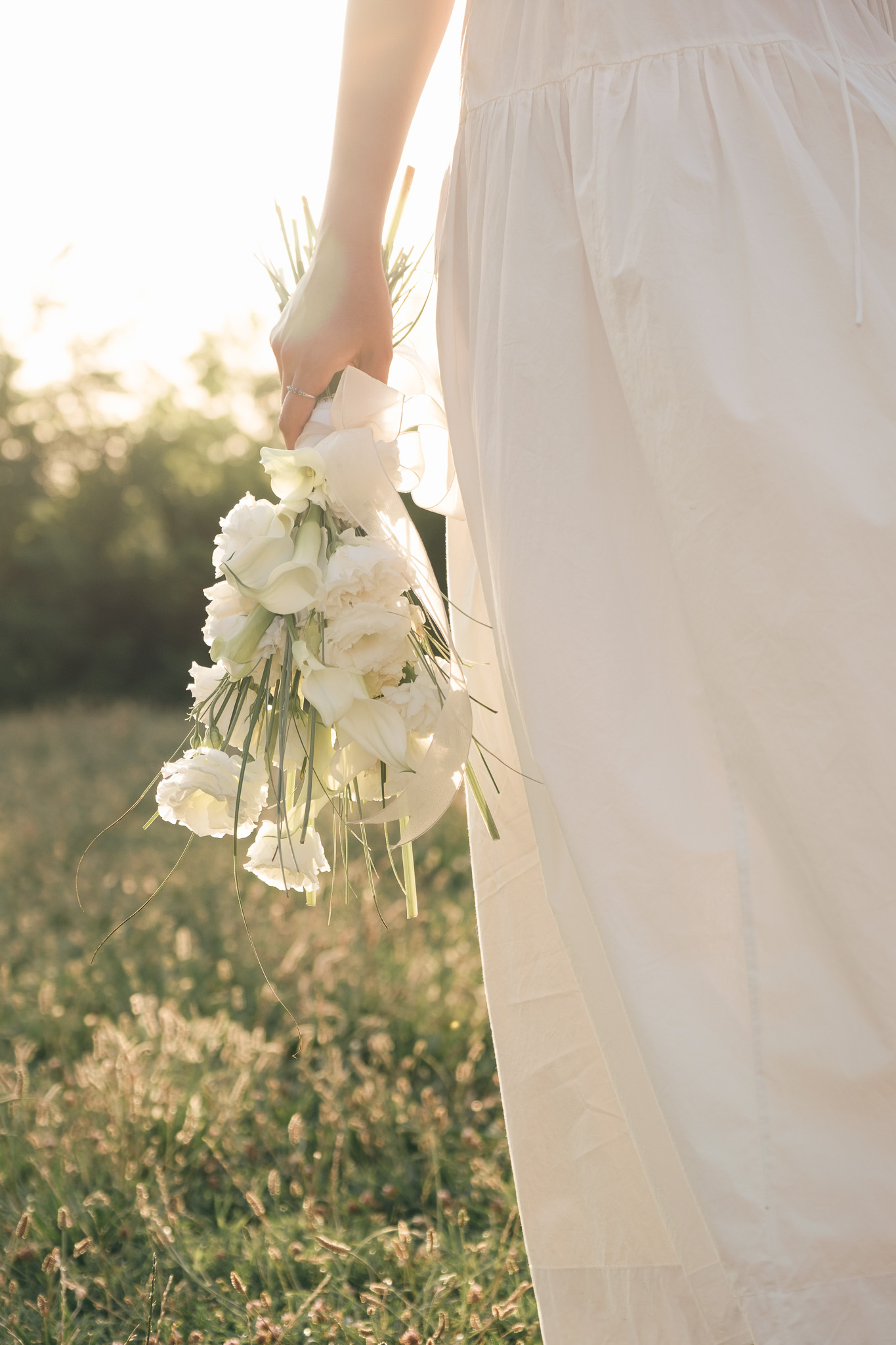
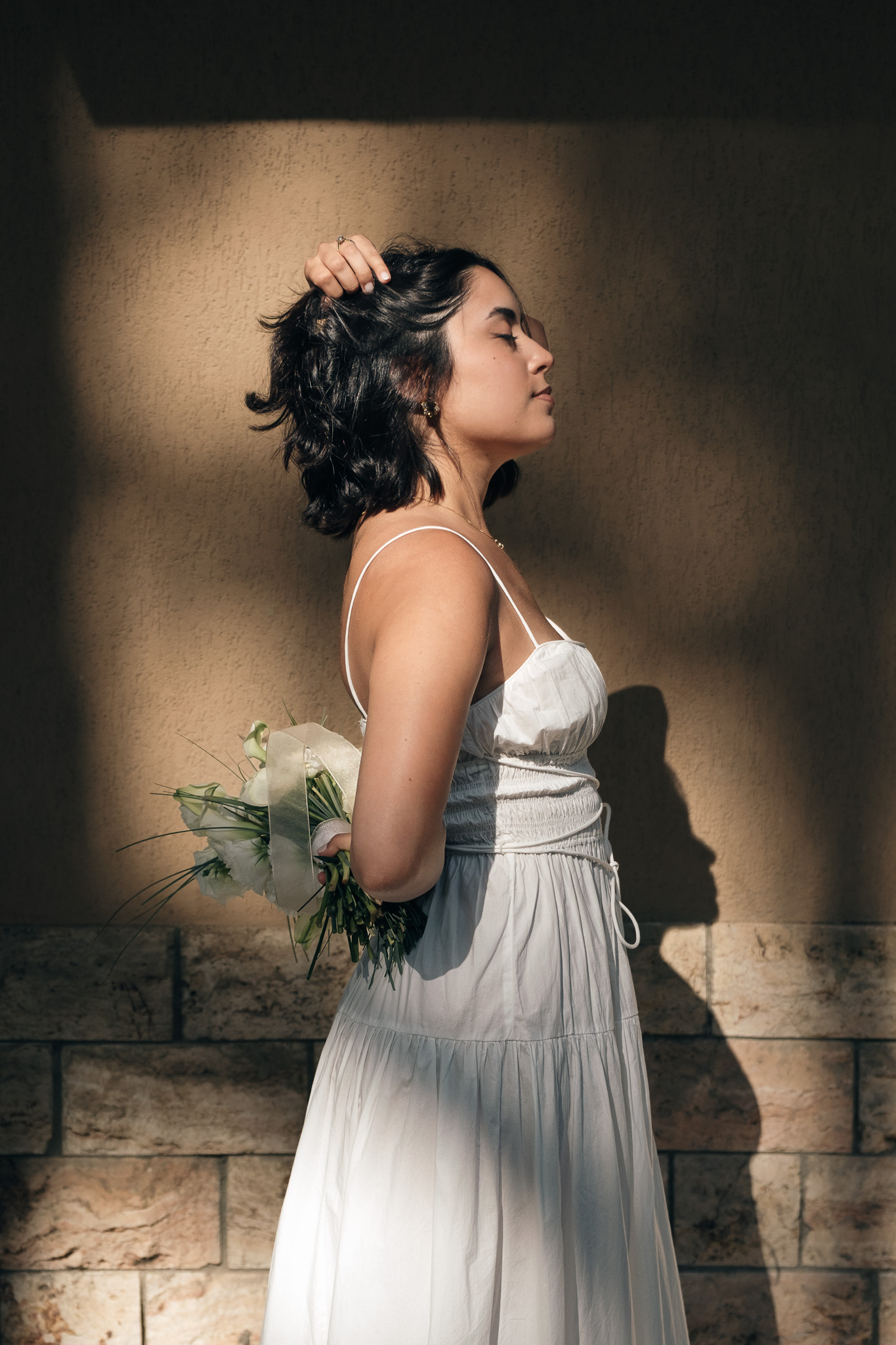
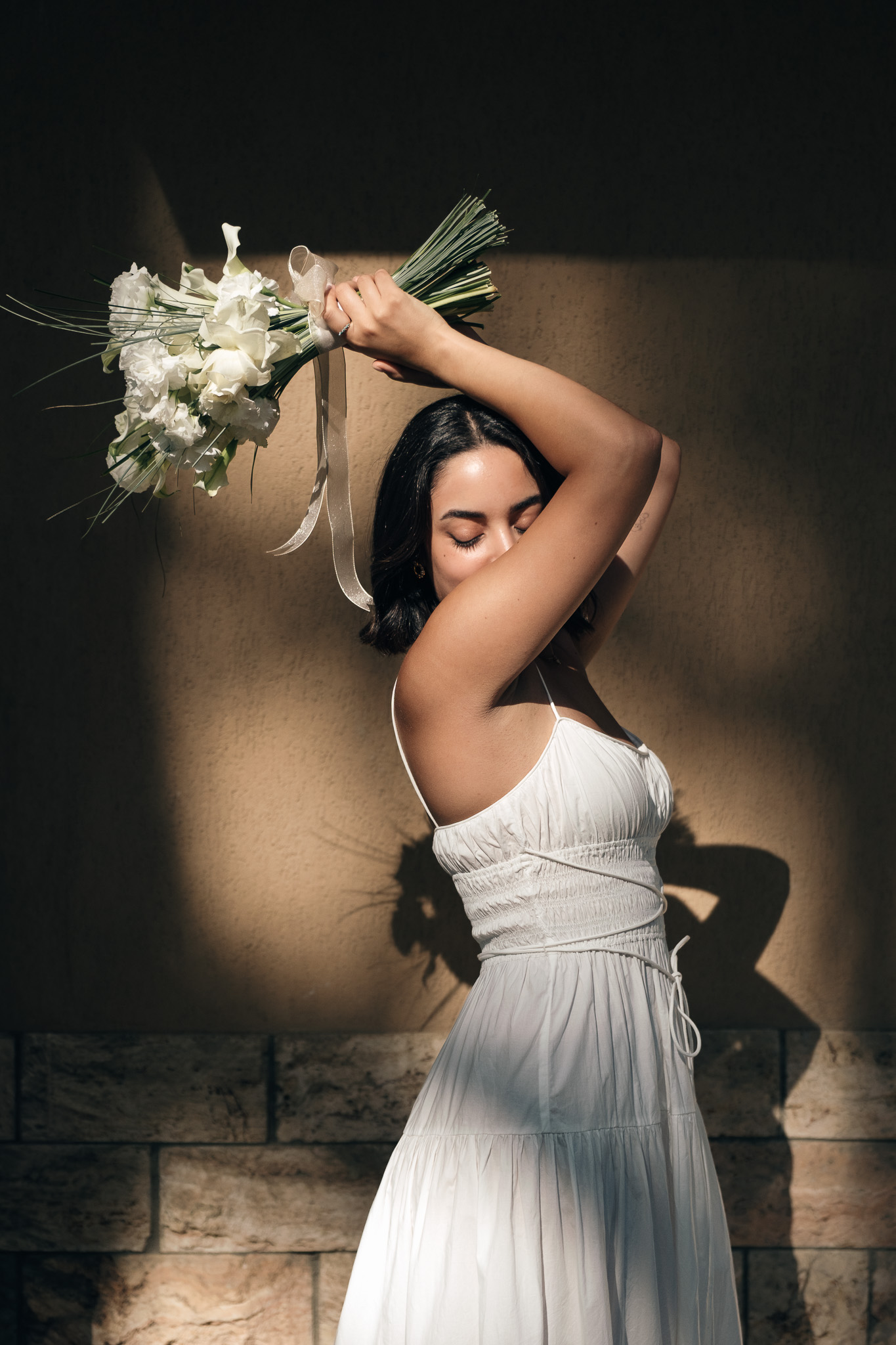
Some photographs from the day are unmistakably about Tuscany, while others are completely about Rana and Zach. I think an elopement story needs both. The landscape should be present, but it should not swallow the people who came there to experience it.
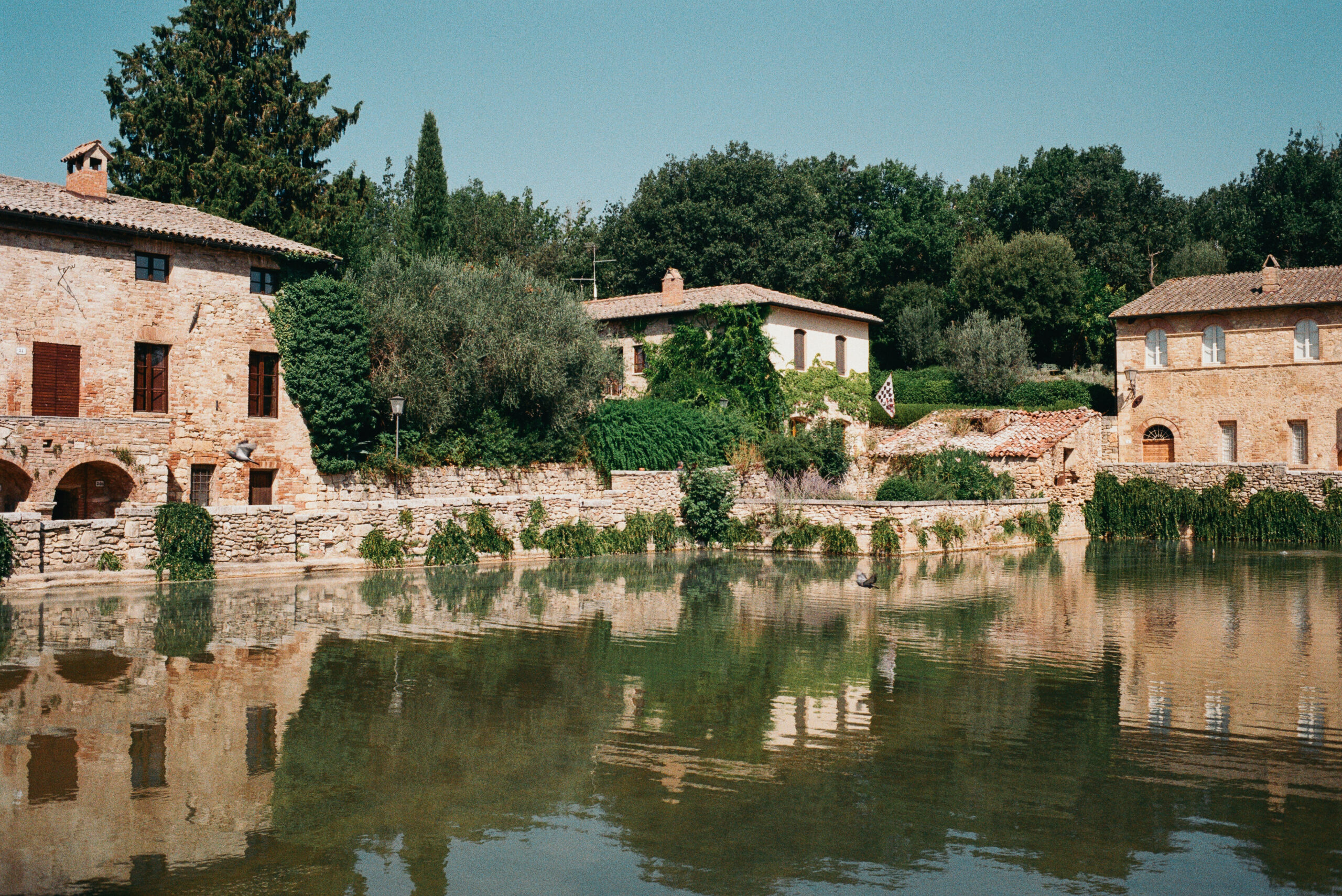
Pienza gave us Renaissance architecture, small streets and wide views across Val d’Orcia. Bagno Vignoni had a completely different atmosphere, with its historic thermal water and compact stone centre. Montepulciano brought vineyards, wine culture, steep streets and the kind of landscape that naturally led us into another subject I am probably incapable of avoiding.
Wine.
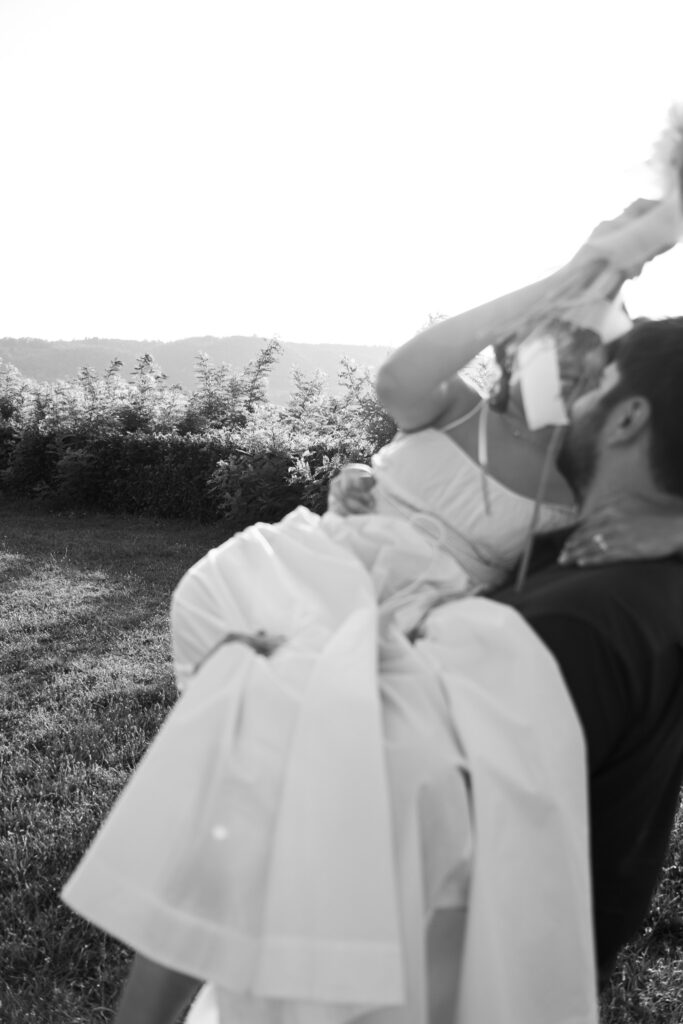
Prugnolo Gentile, Sangiovese and a Little Unrequested Wine Education
At some point during the day, Rana picked up a single Prugnolo Gentile grape. For me, that was dangerous territory. I studied wine, and whenever I am photographing somewhere like Tuscany, I feel a slightly unreasonable responsibility to explain to my couples what is growing around them and what they might be drinking later. So between photographs there was also some wine education.
Prugnolo Gentile is the local name for a Sangiovese clone around Montepulciano and is central to the identity of Vino Nobile di Montepulciano. What I find interesting about Sangiovese is how much its character changes across Tuscany. The grape belongs to the same family, but altitude, soil, climate and local tradition can make the experience of drinking it feel very different from one area to another.
That is one of the reasons wine is such a natural part of travelling through Tuscany. The vineyards are not decorative scenery added for visitors. They are part of the agriculture, economy, food culture and history of the region, and they are one of the reasons the countryside looks the way it does. So yes, Rana and Zach also had to listen to me talking about Sangiovese, Prugnolo Gentile and Tuscan red wine while we were moving through Val d’Orcia. Luckily, they seemed fine with it.
More importantly, it suited the kind of day they had asked for. They had not travelled from Texas simply to use Tuscany as a background for photographs. They wanted to understand some of the place while they were there. Food, wine, landscape and photography all belonged to the same experience rather than being separate activities scheduled one after another.
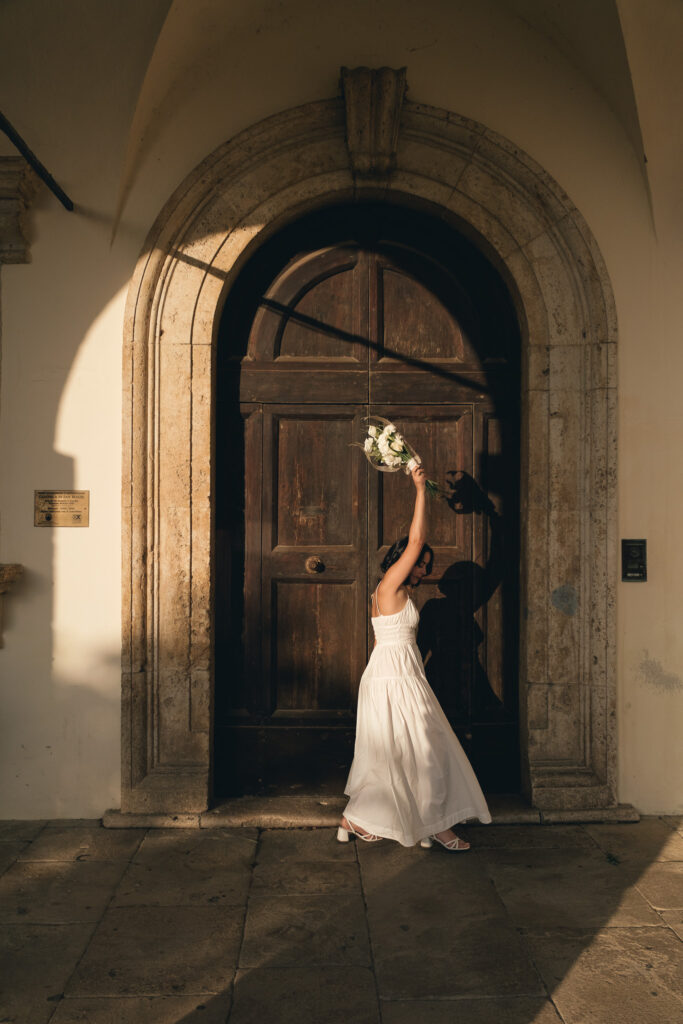
Digital, 35mm Film and Rana With My Leica
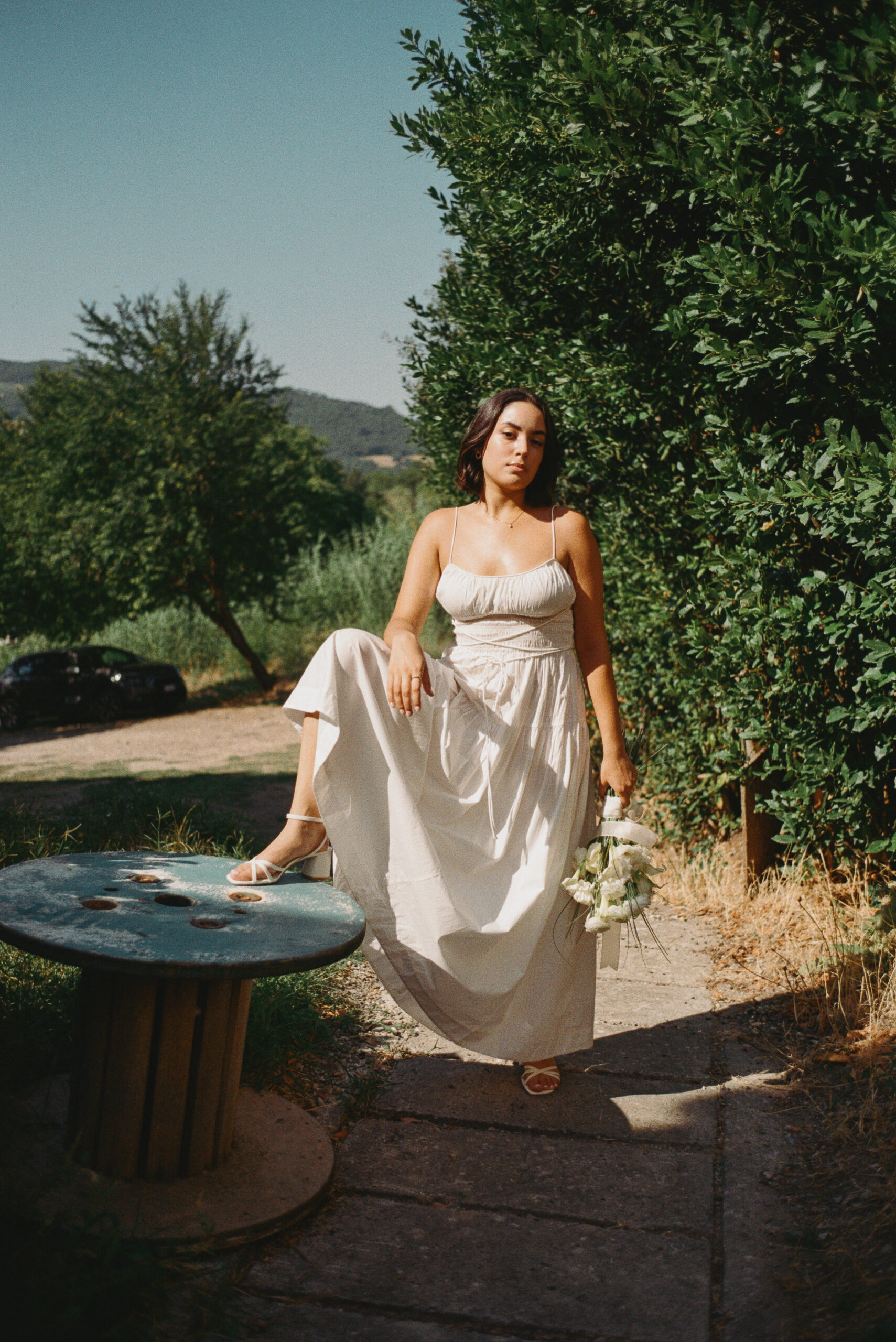
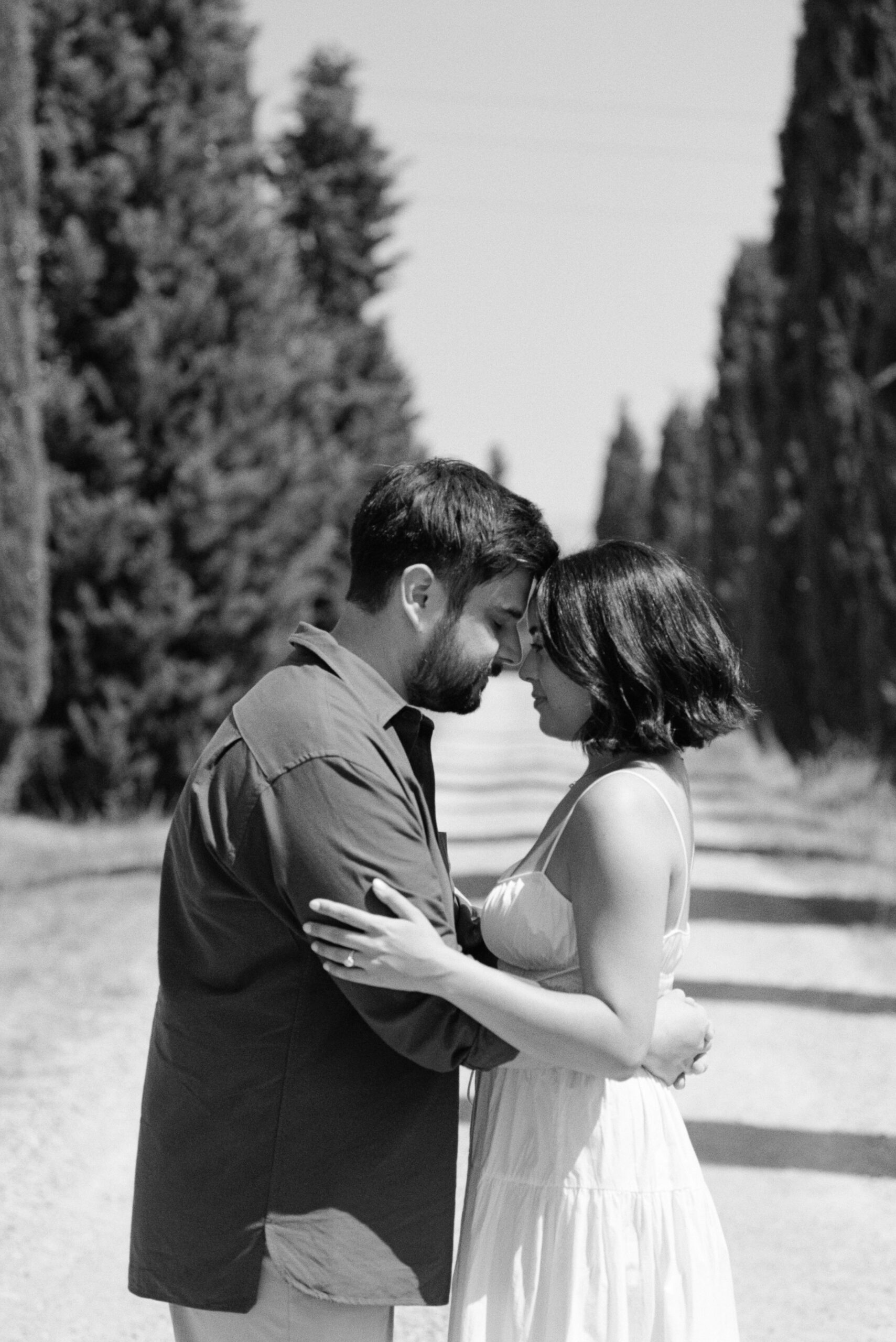
I photographed their elopement using both digital cameras and 35mm film. I like combining the two because they make me work differently and, in the end, they remember the day differently too.
Digital photography gives me freedom and speed. I can react immediately to movement, changing light and small moments without thinking too much about how many frames I have left. Film slows me down. A roll only contains so many photographs, so I tend to look a little longer before deciding whether something deserves a frame. That limitation is still one of the things I enjoy most about shooting weddings and elopements on film. It creates a different kind of attention.
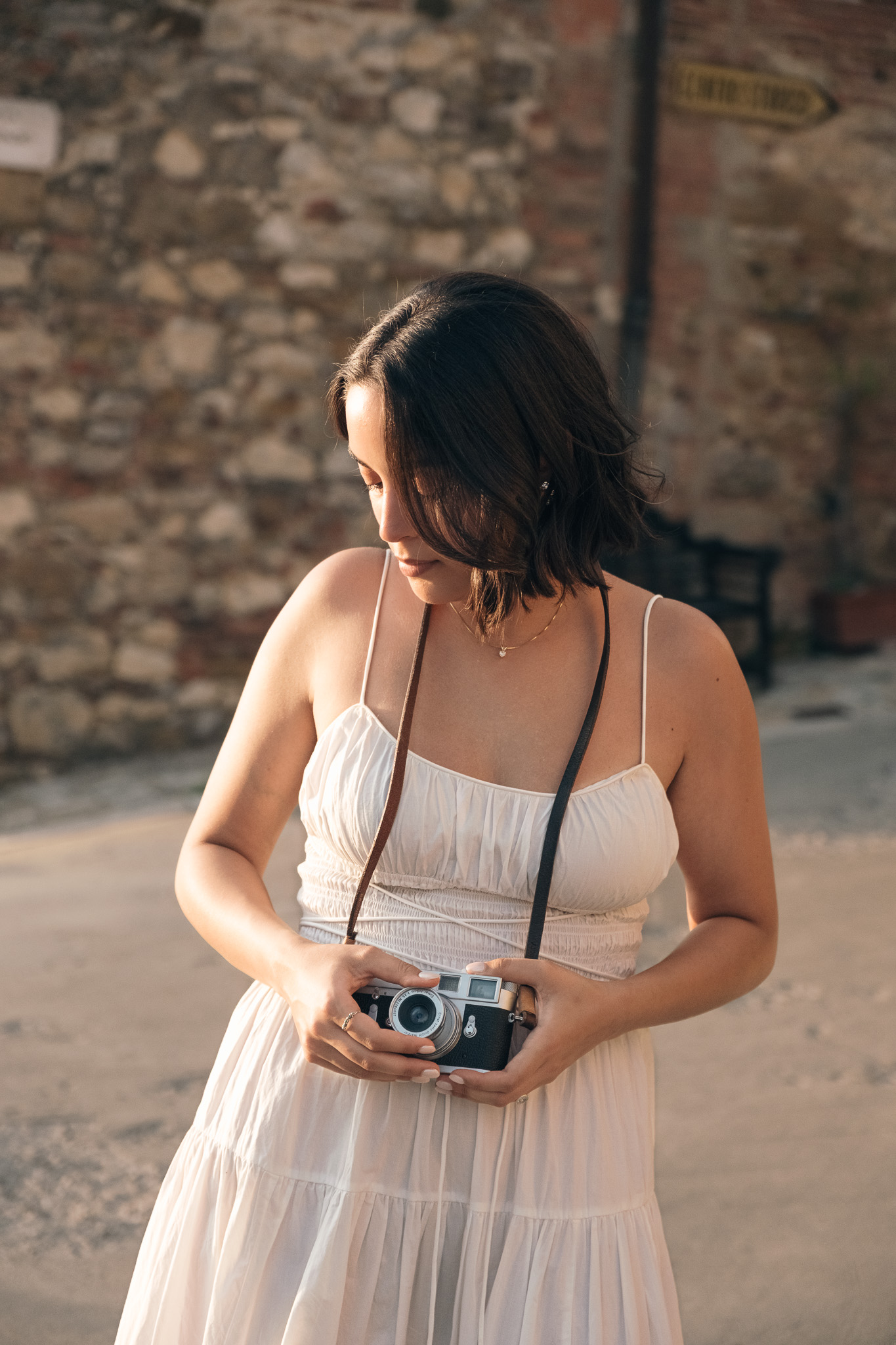
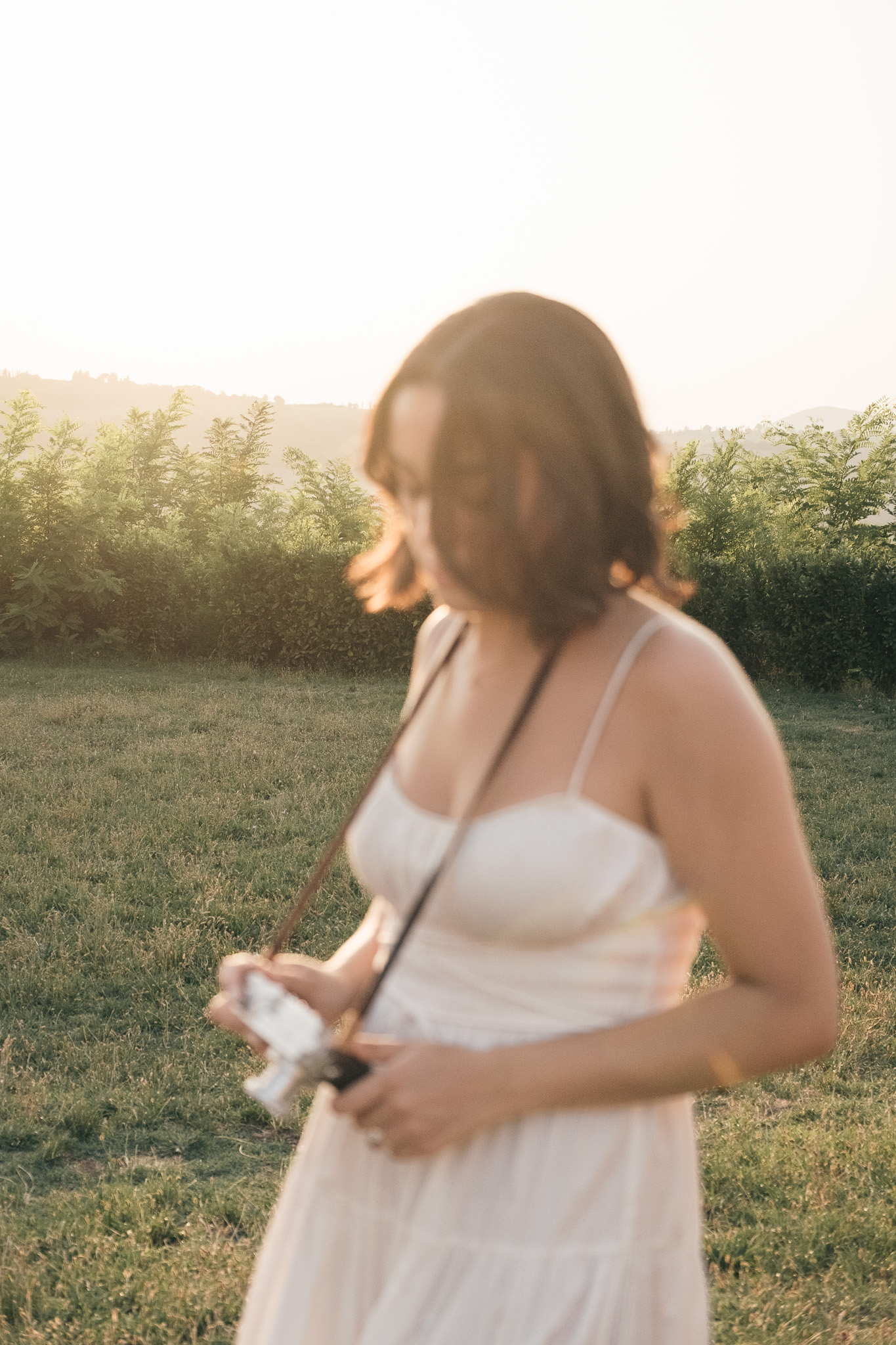
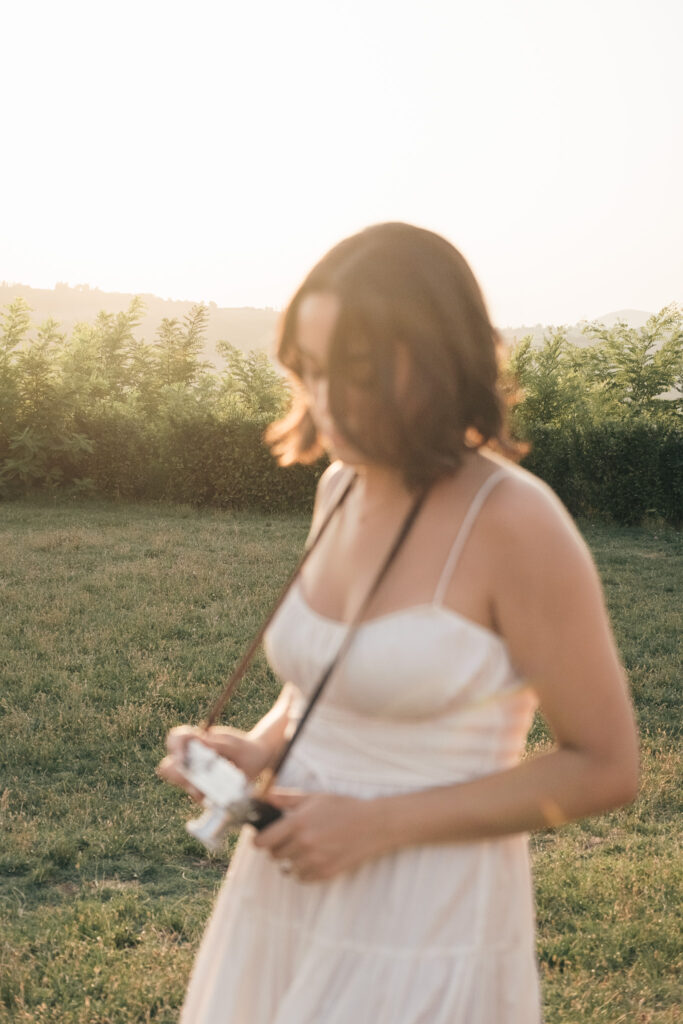
At some point I learned that Rana was also interested in 35mm photography, so naturally I handed her my Leica M2. Partly because I wanted her to try it and partly because, once I saw her with it, I immediately wanted to photograph her holding it too. That led to another long conversation about film grain, texture, imperfections and the strange quality that makes certain analogue photographs feel different even when it is difficult to explain exactly why.
Those kinds of conversations are another reason I enjoy spending a whole day with a couple. Once there is enough time, the relationship stops being only photographer and client. People start talking about the things they actually care about, and those interests slowly become part of the day.
By the time we reached dinner, we had already spent many hours together. Zach is an academic, and I have a degree in Political Science and International Relations, so the conversation eventually moved in another fairly predictable direction. Politics, society, life in the United States, life in Italy, and the strange things every country learns to accept as normal. Between Zach’s academic background, Rana’s interest in film photography and my tendency to start talking about wine whenever I see a vineyard, I realised that I had connected with the two of them through completely different subjects. That is probably what I remember most clearly now. Not one particular photograph, but the conversations that happened between the photographs.
For me, photography becomes much more interesting when that kind of connection exists. I am obviously there to document a wedding or an elopement, but I do not want to stay on the surface of it. I want to understand something about the people in front of me: how they relate to each other, what makes them comfortable, what makes them laugh, and what kind of day actually feels natural to them.
Rana later described the photographs as the first ones that really felt like “them.” That is probably one of the nicest things I could hear, because it is exactly what I hope for when I photograph a couple. Not a version of them created for the camera, but something that still feels recognisable when they look back at it years later.
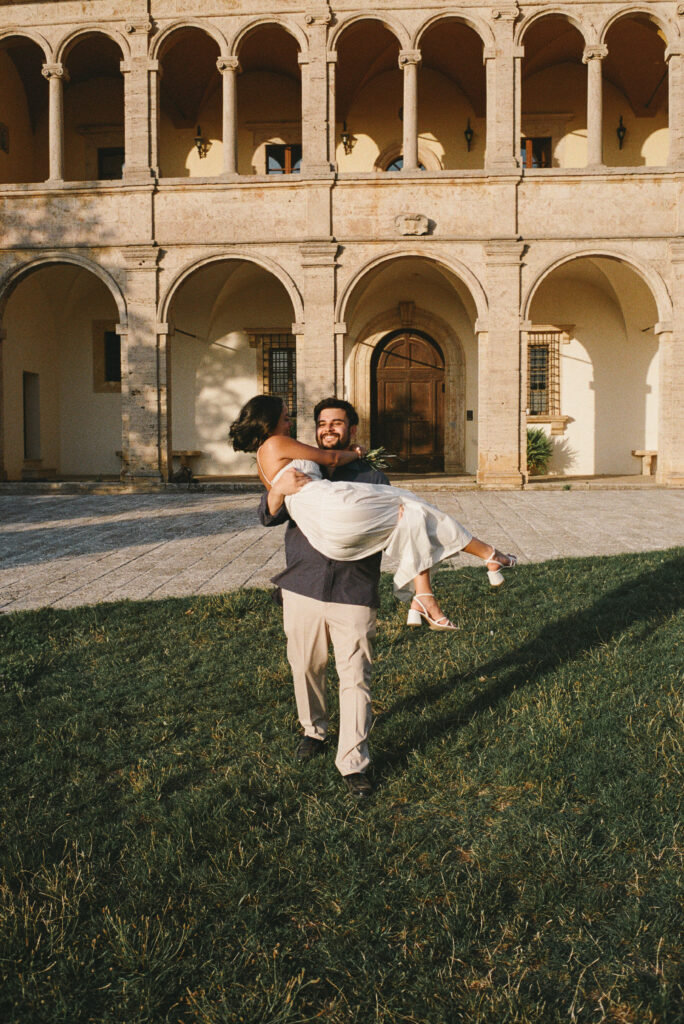
Why a Full Day Elopement Changes the Photography
A full day gives us something that is difficult to reproduce in a short session: time to stop being strangers. At the beginning of any photoshoot, everyone is still figuring each other out. The couple is understanding how I work, and I am learning how they move together, how much direction they want, whether they prefer silence or conversation, and how quickly they become comfortable with a camera nearby.
If we only have one or two hours, part of the job is naturally about making that process happen faster. With Rana and Zach, we had the opposite situation. We had enough time for everything to happen gradually.
By the afternoon, there was no need to constantly explain what we were doing. They could walk, talk, stop for a drink, look at something, forget about me for a while and simply continue with their day. The photographs became less self-conscious because our relationship had changed too.
That is one of the biggest advantages of a full day elopement in Tuscany. It is not simply about receiving more photographs or visiting more locations. It is about allowing the day to have its own rhythm.
This is also why I would rather spend more time in fewer places than turn Val d’Orcia into a collection of famous photo spots. There are endless lists online about where to photograph in Tuscany, but I do not think the best way to experience this area is to collect as many viewpoints as possible.
I would rather walk through Pienza without rushing back to the car, stop in Bagno Vignoni because we feel like having a coffee, spend time around Montepulciano and its vineyards, and pull over somewhere because the light suddenly looks good. I would rather sit down for dinner without calculating whether we are losing photography time.
Rana and Zach understood that instinctively. Their goal was never to return home with proof that they had visited every famous corner of Tuscany. They wanted to spend a day together there. The point was not to collect Tuscany. It was to spend some time inside it.
Photographing a Tuscany Elopement Without Turning It Into a Production
My approach as a Tuscany elopement photographer is relatively simple. I give direction when direction is useful and try to disappear when it is not.
Sometimes I will ask a couple to walk in a certain direction because I see better light there. Sometimes I will stop them because I have noticed a composition. Sometimes we will deliberately make a portrait. But I do not want a full day elopement to feel like eight hours of posing.
I would rather spend the day walking together, talking, eating, driving through the countryside, stopping in places we had planned and occasionally in places we had never discussed at all. The photographs can happen between those things. Rana and Zach’s elopement was exactly that. Digital photographs mixed with 35mm film. Medieval towns mixed with vineyards. Portraits mixed with completely unplanned moments. Food, wine, roads, conversations and enough time to actually feel where we were.
For couples planning an elopement in Tuscany, I think Val d’Orcia works especially well for this kind of approach. Pienza, Bagno Vignoni and Montepulciano are close enough to belong to the same story, but different enough that moving between them never feels repetitive. The countryside in between is just as important as the towns themselves.
A full day can begin in a small village, continue through vineyards and open landscapes, include lunch or a wine stop, move somewhere else because the light has changed and eventually finish over dinner. It gives you the freedom to experience Tuscany rather than simply photograph it. That was exactly what Rana and Zach had asked me for months before we met. And after spending the whole day with them, I was reminded again that the best parts are often the ones we do not schedule too tightly.
We can plan the important things in advance: the towns you want to see, the food you want to try, the wine you are curious about and the landscapes that made you choose Tuscany in the first place. But I would always leave some empty space too. Because those spaces are rarely actually empty. They are usually where the detours, conversations, unexpected stops and photographs that I remember most begin.
Rana and Zach came to Tuscany wanting a day that felt relaxed, exploratory and completely their own. By the end of it, that was exactly what it had become. And for me, that is the best possible result of photographing an elopement: not just beautiful images, but photographs that still feel like the people who lived the day.
How Does It Work?
- Contact me and then let’s schedule a call so we get to know each other by talking about your needs and my services in detail.
- Once we agree on terms I send you a confirmation email and ask you to pay the first half of the total agreed amount so I fix the date.
- You have fun and I take care of the rest with my camera.