

Madeline and Josh’s Three-Day Alternative Wedding in Rome, Italy
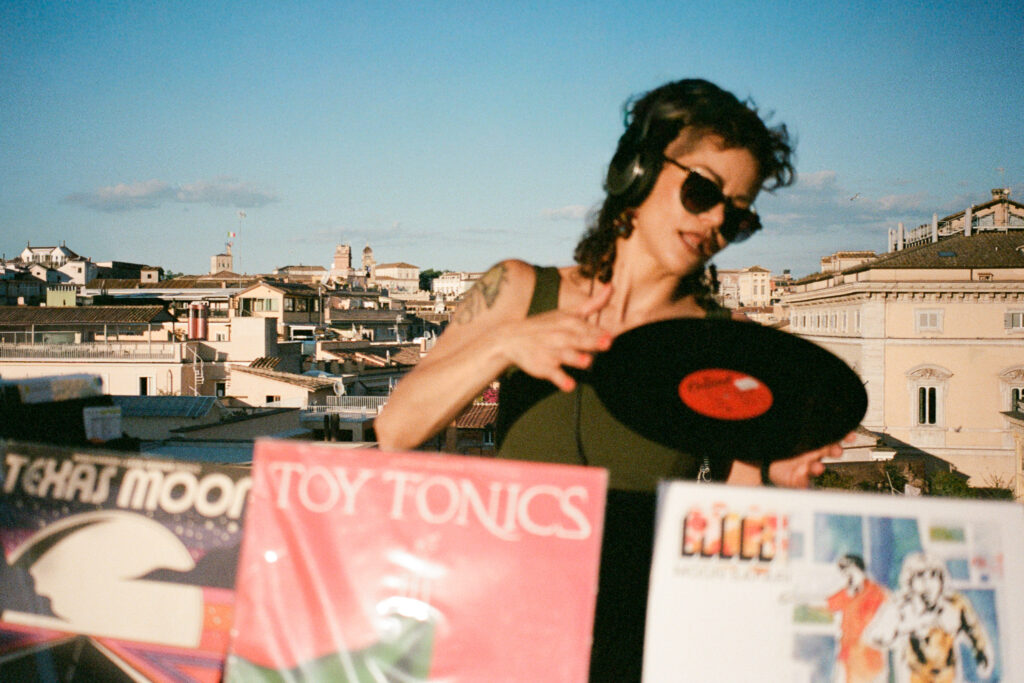
At some point during the celebrations, Madeline stepped behind the decks and became the deejay of her own alternative wedding. I had already photographed her playing music at the Tuk Tuk Bar, but seeing her do it again later at Vista Rooftop felt like the perfect summary of the entire celebration. She was not standing at the centre of a carefully arranged spectacle, waiting for the next traditional moment to happen. She was shaping the atmosphere herself. The music, the people around her, the view across Rome and the movement of the evening all belonged to the same story.
Madeline and Josh’s wedding took place over three days, spread across different parts of the city and photographed using both digital and 35mm film. It was not a wedding that could be reduced to one venue, one visual style or one carefully controlled mood. And that was exactly what made it memorable. As an alternative wedding photographer in Italy, these are the celebrations I feel especially drawn to: weddings that are built around the personalities of the people getting married rather than around a template of what a wedding is supposed to look like.
Before the Wedding, There Was Already a Friendship
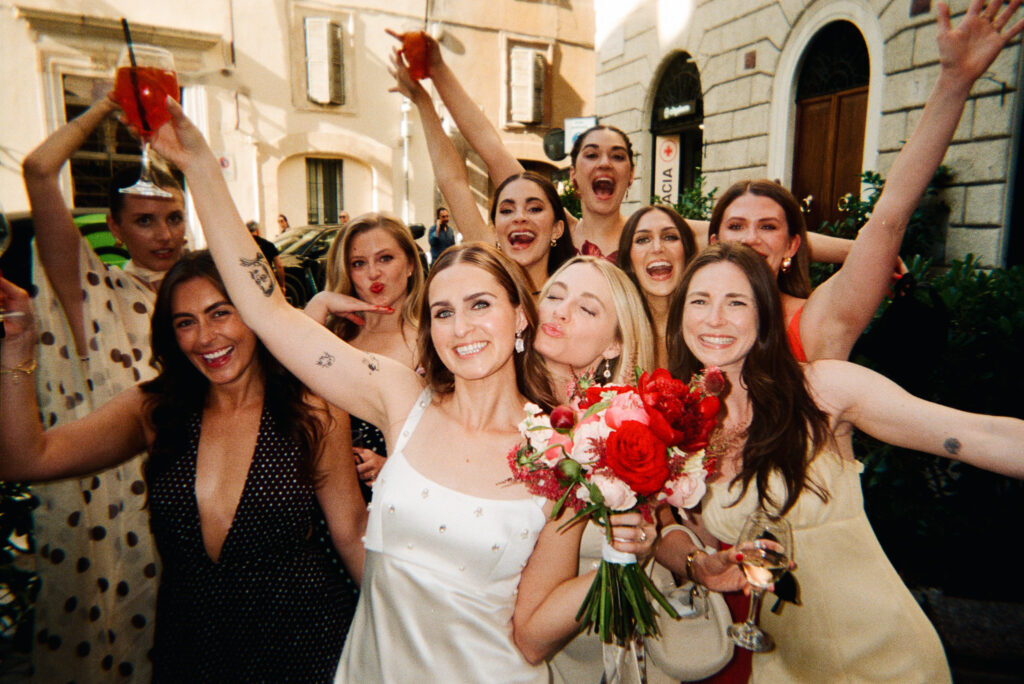
Madeline and Josh came from Chicago to get married in Rome, bringing their family, friends and their own deejay, named DJ Tess, with them. Their connection with the city, however, had started long before the wedding.
After our first email exchanges, they travelled to Rome to scout possible locations and meet me in person. We started with an aperitivo and eventually ended up at my apartment, where they met my cat, Zelda. It was a small thing, perhaps, but it changed the feeling of everything that followed.
By the time the wedding arrived, I was not walking into a room full of complete strangers. I was meeting people I already knew I liked. We had shared drinks, conversations and a glimpse of ordinary life before entering the strange, beautiful intensity of a wedding celebration.
That familiarity matters in documentary wedding photography. The more comfortable people feel around the photographer, the less they perform for the camera. Expressions last longer. Conversations continue uninterrupted. The slightly chaotic, funny and emotional moments are allowed to exist without immediately becoming poses. Trust makes space for better photographs. Josh had even bought a copy of my Slow Travel book during his previous visit to Rome without ever mentioning it to me. I only discovered this later, and it touched me more than he probably realised. It made our meeting feel connected to something beyond the wedding itself: a shared curiosity about cities, movement, people and the stories hidden between destinations.
A Wedding That Refused to Stay in One Place
Some weddings are designed around a single venue. Everything happens within the same walls, and the day is divided into clearly marked sections: ceremony, portraits, dinner and party. Madeline and Josh chose a different rhythm.
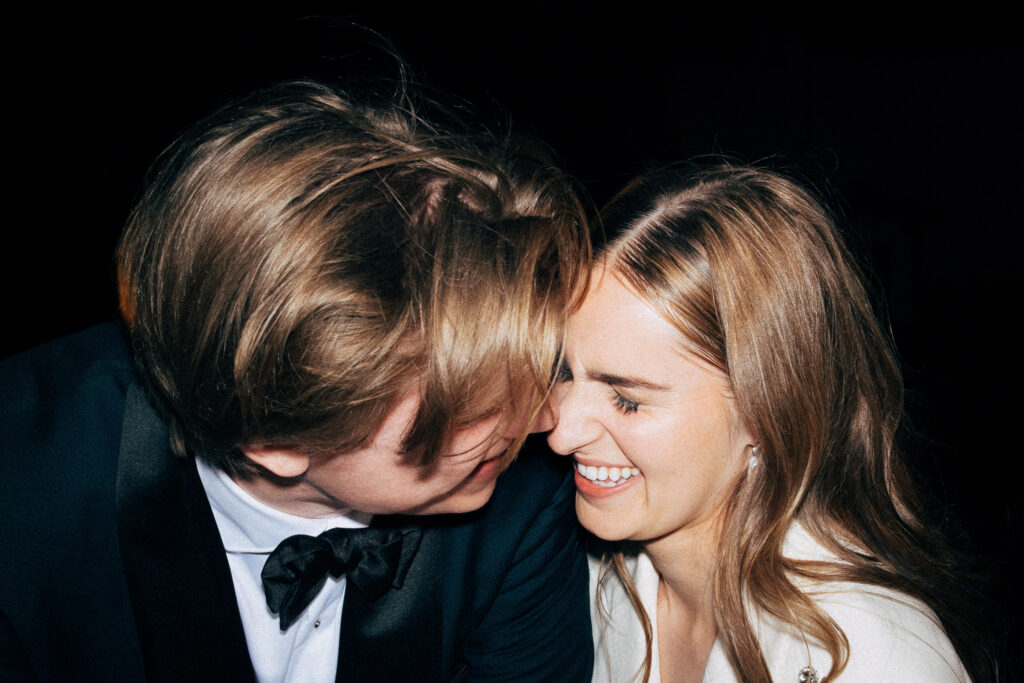
Their wedding moved through Rome over three days. There were formal moments, but also long stretches in which everyone could simply be together. The ceremony, drinks, conversations, music, family, friends, streets and rooftops were not separate productions. They flowed into one another. The city became part of the structure. This is one of the reasons Rome works so well for an unconventional wedding. You do not have to transform the city into a wedding venue. You can allow the celebration to travel through it.
A bar can become one chapter. A street can connect two parts of the story. A rooftop can hold the final hours of the evening. Some of the strongest photographs may happen during the walk between them, when no one believes anything important is taking place. There is no need to force every part of the wedding into one location simply because that is the usual format. A celebration can be scattered across a city and still feel completely connected. In fact, the movement can give it a stronger identity. Madeline and Josh’s wedding did not feel fragmented. It felt alive.
When the Bride Controls the Music
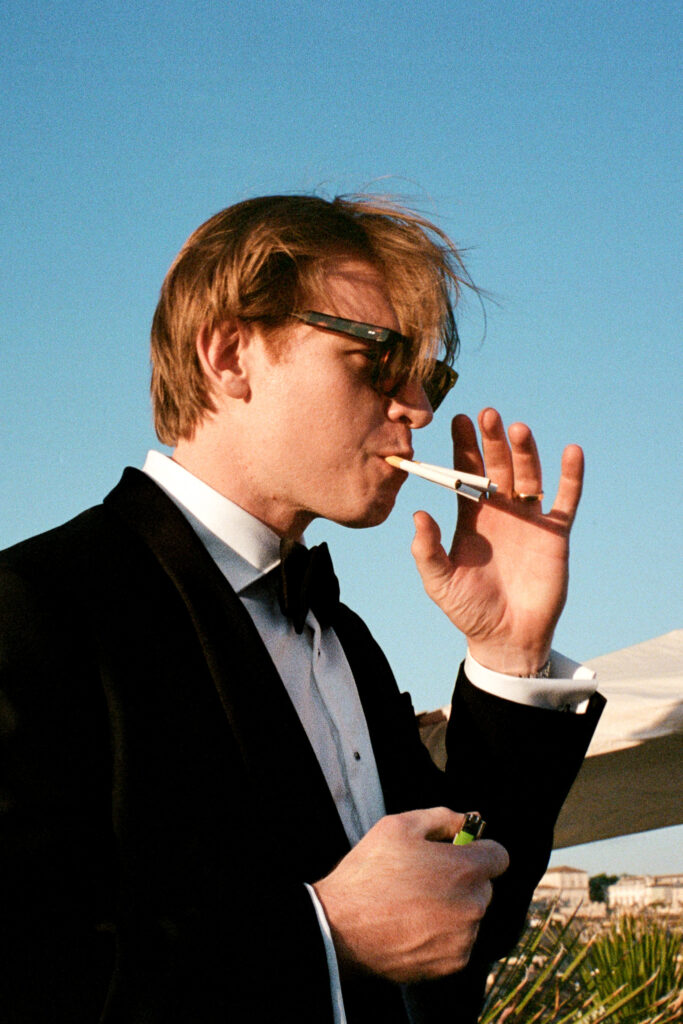
Photographing Madeline as she played music became one of my favourite elements of the wedding. There was something revealing about it. She was not only enjoying the atmosphere around her. She understood how to create it. Watching a bride become the deejay of her own wedding removes the distance between the person being celebrated and the celebration itself.
At the Tuk Tuk Bar, the music already gave the gathering its own personality. Later, at Vista Rooftop, the scene expanded. Rome stretched out around everyone while the party developed according to its own logic. No one appeared to be waiting politely for the next scheduled tradition. People drank, danced, talked and moved between groups. The evening changed speed constantly. At times, it was loud and energetic. A few minutes later, something intimate would happen at the edge of the crowd.
Those changes are important to me. I am interested not only in the obvious centre of a wedding, but also in its quieter borders: a hand resting on someone’s shoulder, the expression immediately after a joke, two people briefly escaping the music, or a guest watching the dance floor from a distance. The best wedding stories contain more than one emotional temperature.
Photographing the Celebration on Digital and 35mm Film
I photographed the three days using digital cameras and 35mm film together. The two formats do not compete with each other. They respond differently to the same moment.
Digital photography gives me speed and flexibility. I can follow rapid movement, changing light and unpredictable interactions without interrupting what is happening. This is especially valuable during a celebration moving between several locations, where the visual conditions can change from one minute to the next.
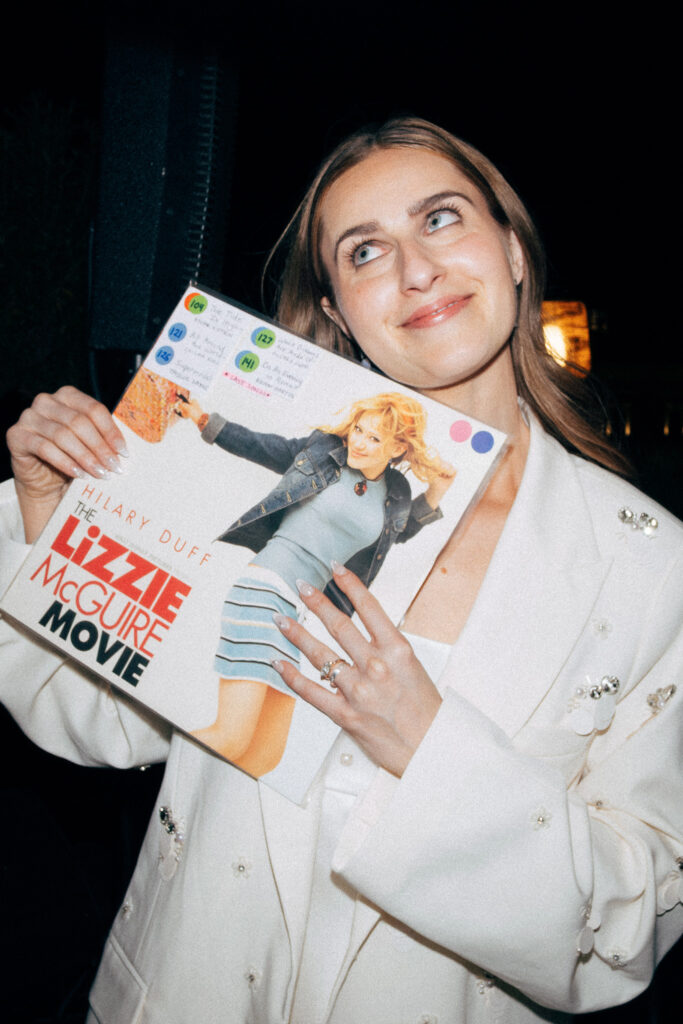
Film asks for another kind of attention. With only a limited number of frames on each roll, every photograph requires a small decision. The result has its own texture, softness and imperfect character. Colours behave differently. Highlights feel gentler. Grain becomes part of the memory rather than something that needs to be removed.
For a wedding like this, combining digital and 35mm film felt natural. The digital photographs could carry the speed and complexity of the three-day story. Film could preserve particular fragments with a more tactile quality: the rooftop light, the streets of Rome, Madeline behind the decks, faces appearing briefly through a crowd, and the strange little moments that could never be planned.
Film does not make a wedding more authentic by itself. Authenticity comes from the people in the photographs. But when the right moment and the right frame meet, 35mm can make a memory feel almost physical.
What Makes a Wedding Alternative?
An alternative wedding does not need to follow a particular aesthetic. It does not require unusual clothing, dramatic decorations or a deliberately rebellious attitude. It can be elegant, understated, chaotic, intimate or carefully designed.
What makes it alternative is the freedom to question the standard structure. Perhaps the celebration lasts three days instead of one. Perhaps the ceremony and reception happen in completely different parts of the city. Perhaps the bride becomes the deejay. Perhaps dinner is relaxed, the guest list is small, or the wedding ends on a rooftop rather than in a traditional reception hall.
A non-traditional wedding becomes meaningful when the decisions feel personal rather than unusual for the sake of being unusual. Madeline and Josh did not seem interested in rejecting wedding traditions just to prove a point. They simply kept the parts that belonged to them and allowed the rest of the celebration to develop in its own way. That distinction is important. A wedding should not feel like a performance of individuality either. It should feel comfortable enough that the couple can recognise themselves inside it.
Rome Was More Than a Backdrop
Rome is often described as a backdrop for destination weddings, but I do not think “backdrop” is quite the right word. A backdrop remains still. Rome rarely does. The city interrupts plans, changes the light, adds noise, creates unexpected encounters and constantly places ordinary life beside monumental history. A wedding can move through grand architecture and, a few minutes later, become part of a crowded street or a neighbourhood bar. This unpredictability suits documentary photography.
Madeline and Josh did not appear separate from the city. They moved through it with their guests, allowing Rome to enter the story without turning every location into a postcard. The result was unmistakably Roman without needing to prove it in every photograph. Sometimes the city was visible in the skyline. Sometimes it appeared through the atmosphere of a bar, the warmth of an evening, a drink on the table or the changing energy of the streets. Place is not communicated only through famous monuments. It is also communicated through behaviour.
The Photographs I Remember Most
Large weddings produce thousands of gestures, expressions and interactions. It is impossible to predict which details will remain in your mind afterwards.
I remember the emotional letter Madeline and Josh gave me.
I remember how considerate Madeline was toward my assistant and me, making sure we were not simply working around the celebration but were also being looked after within it. That kind of thoughtfulness says a great deal about a person, especially during a wedding, when there are hundreds of other things demanding attention.
I remember the cake being so good that Josh stared at his spoon like the child in The Matrix, as though he were about to bend it using only his mind.
I remember the Campari spritzes and the long conversations in Piazza Testaccio with their deejay, who had arrived in Rome as part of the wedding and left as someone I considered a friend.
None of these moments would appear on a conventional wedding checklist. Yet together, they describe the celebration far more clearly than a list of decorations or scheduled events ever could. That is what I want wedding photography to preserve. Not only what the day looked like, but how it behaved. How people treated one another. What made everyone laugh. Where the energy changed. Which tiny gestures revealed something larger.
Planning a Non-Traditional Wedding in Italy
Madeline and Josh’s wedding showed that a celebration does not need to remain in one place or follow one strict timeline to feel complete. It can move through a city. It can last several days. It can combine an emotional ceremony with bars, streets, rooftops, music and long conversations. It can be photographed digitally for its speed and on 35mm film for its texture. It can feel elegant without becoming formal, and carefully planned without losing its spontaneity. The most important thing is that the choices belong to the people getting married.
For couples searching for an alternative wedding photographer in Italy, that is also the approach I bring to the photography. I do not want to rearrange a wedding until it resembles somebody else’s idea of a beautiful day. I want to understand its rhythm, move with it and photograph the moments that give it its own identity. Madeline and Josh created a wedding that travelled through Rome like a story. I was lucky enough to follow it.
How Does It Work?
- Contact me and then let’s schedule a call so we get to know each other by talking about your needs and my services in detail.
- Once we agree on terms I send you a confirmation email and ask you to pay the first half of the total agreed amount so I fix the date.
- You have fun and I take care of the rest with my camera.
Anything Else to Ask?
Check out the FAQ page I put together. I’ve done my best to answer all your possible questions about alternative wedding photography and my work.